Two adjacent parcels in Medford's Hillside neighborhood offering an existing
institutional building, dedicated parking parcel, walkable Green Line access,
and multiple paths for owner-use, adaptive reuse, or redevelopment.
0.53 acCombined site: 0.33 ac + 0.20 ac
GR + SF2Two zoning profiles
2 parcelsBuilding plus parking parcel
MBTAWalkable Green Line access
Executive Snapshot
The facts for the first internal approval meeting
The decision point is not simply whether Tufts needs another building. It is
whether walkable control of an existing institutional asset plus a separate
parking parcel can solve near-campus program pressure faster than a new
construction or lease process.
Decision frame
Near-campus control with immediate program-space utility
100 Winthrop provides existing rooms for assembly, teaching, counseling,
food service, administration, student support, and community engagement.
101 Winthrop preserves parking, access, service logistics, and future
campus-support flexibility.
Existing building area14,874 sq ft
FY2026 assessor living area for the main institutional building at 100 Winthrop.
Campus adjacencyTufts edge
Walkable to campus and the Medford/Tufts Green Line station.
Parcel control0.53 ac combined
100 Winthrop is the 0.33 acre main property; 101 Winthrop adds 0.20 acres of separately controlled parking and service-access flexibility.
Parking control20+ spaces
Approx. 20+ surface spaces, two driveways serving 100 Winthrop, and 9,000 sq ft of asphalt paving noted at 101 Winthrop.
Use profileInstitutional assembly
Existing institutional classification; confirm allowed campus-support uses during diligence.
ZoningGR + SF2
100 Winthrop: GR. 101 Winthrop: SF2. Use-specific review should be completed before program reliance.
Construction historyc. 1950
Current structure reportedly built after a fire; reviewer to verify against municipal and historical records.
All specifications, history, dates, dimensions, zoning references, parking counts,
condition statements, concept images, and use assumptions are preliminary diligence
inputs only. Reviewer is solely responsible for verifying all information with municipal
records, survey, zoning, legal, engineering, environmental, architectural,
accessibility, facilities, risk, insurance, and other appropriate advisors.
Long-held institutional property with a mid-century replacement structure
The property has reportedly been institutionally held since the early 1900s.
After a fire, the current structure was built circa 1950 and has continued to
function as a community-serving institutional building. Reviewers should verify
the ownership timeline, fire history, construction date, permits, and related
municipal records during diligence.
Location Context
A close-in Medford Hillside position Tufts can evaluate quickly
The parcels sit north of Tufts, within walking range of the Medford/Tufts
Green Line station and close enough to I-93, Cambridge, and Boston to support
multiple user groups without giving up neighborhood context.
100 + 101 Winthrop StClose to Tufts, Medford/Tufts Green Line, I-93, Cambridge, and Boston.
Primary site100 & 101 Winthrop St
Adjacent building and parking parcels in Medford Hillside: approx. 0.53 acres combined, with 0.33 acres at 100 Winthrop plus 0.20 acres at 101 Winthrop.
Education anchorTufts University
Campus edge location for housing pressure, student support, education, and community-serving uses.
Transit accessMedford/Tufts Green Line
Approximately 0.4 miles from the site, supporting car-light staff, students, visitors, and program users.
Regional reachI-93, Cambridge, Boston
Highway and urban-core access support staff, service, event, and community partnership logistics.
Asset Overview
What makes this hard to replace
The site combines an existing institutional building, a separate parking parcel,
and walkable Tufts/Green Line access. For a campus-adjacent institutional use,
those pieces are more useful together than evaluated separately.
Transit
Walkable Green Line access
Medford/Tufts access gives staff, students, visitors, and program users a practical car-light path into Cambridge and Boston.
Control
A separate parking parcel
101 Winthrop is not leftover land. It complements the main property's two driveways and preserves flexibility for parking, service access, or future campus-support needs.
Scale
14,874 sq ft institutional building
The existing improvement gives Tufts usable assembly, classroom, office, community hall, and kitchen areas before a major capital project is considered.
Optionality
Multiple campus-support paths
Tufts can evaluate housing support, service-learning, wellness, interfaith, event, classroom, and office uses without depending on one program assumption.
Key takeaway: the combined offering pairs immediate building utility
with separate-parcel parking and future optionality, creating a site position
that is difficult to reproduce in the Medford Hillside market.
Parcel Strategy & Campus-Use Concepts
Two parcels, one campus-use evaluation
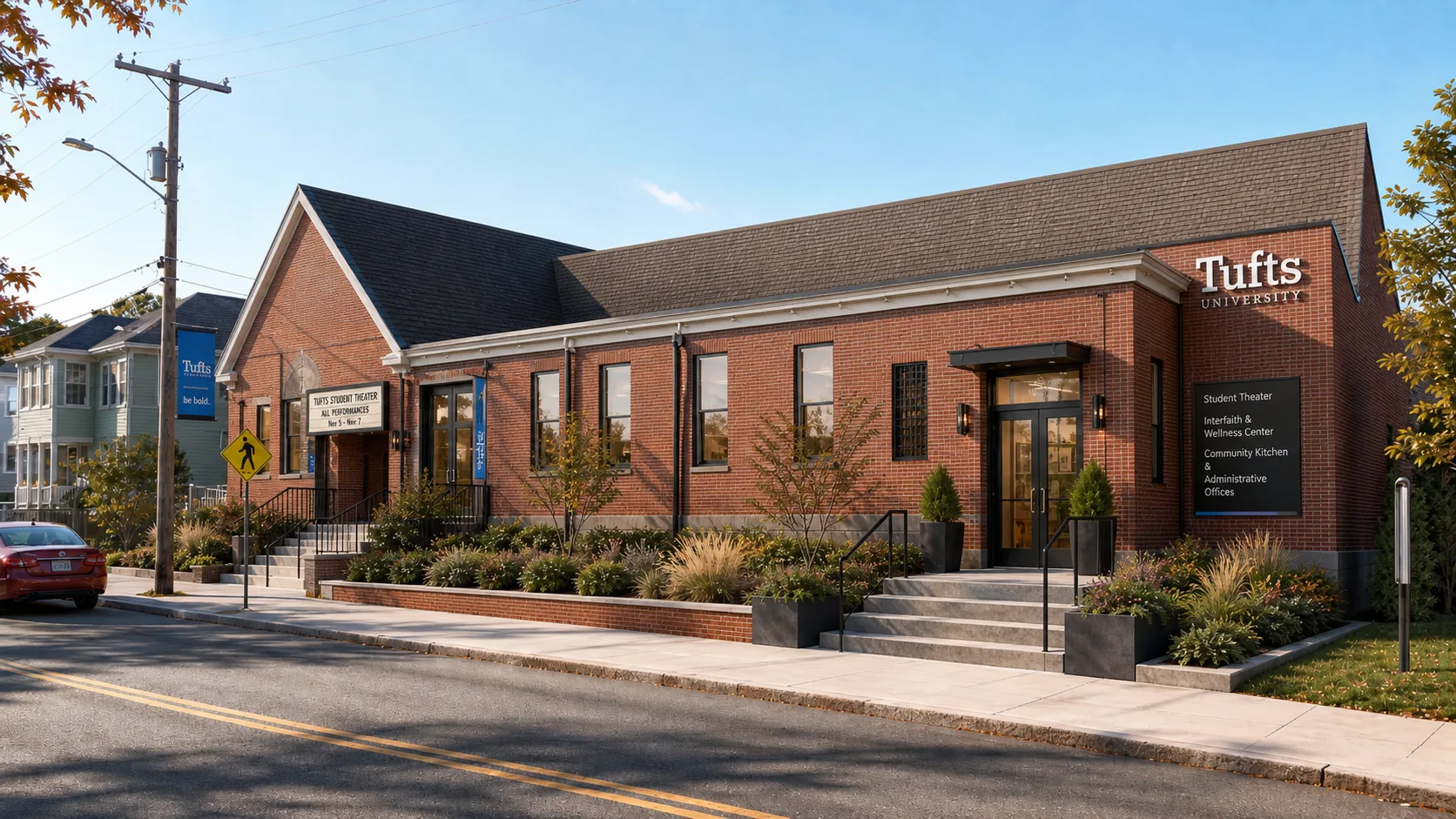
The concept imagery and parcel analysis are best read together: 100 Winthrop
provides the existing institutional building, while 101 Winthrop supports
parking, service access, circulation, and future campus-support flexibility.
100 Winthrop St
Main building opportunity
Existing institutional building with large assembly spaces.
Potential for student-support, academic, wellness, community, or administrative reuse.
Approx. 0.33 acre main parcel with two driveways serving access and circulation.
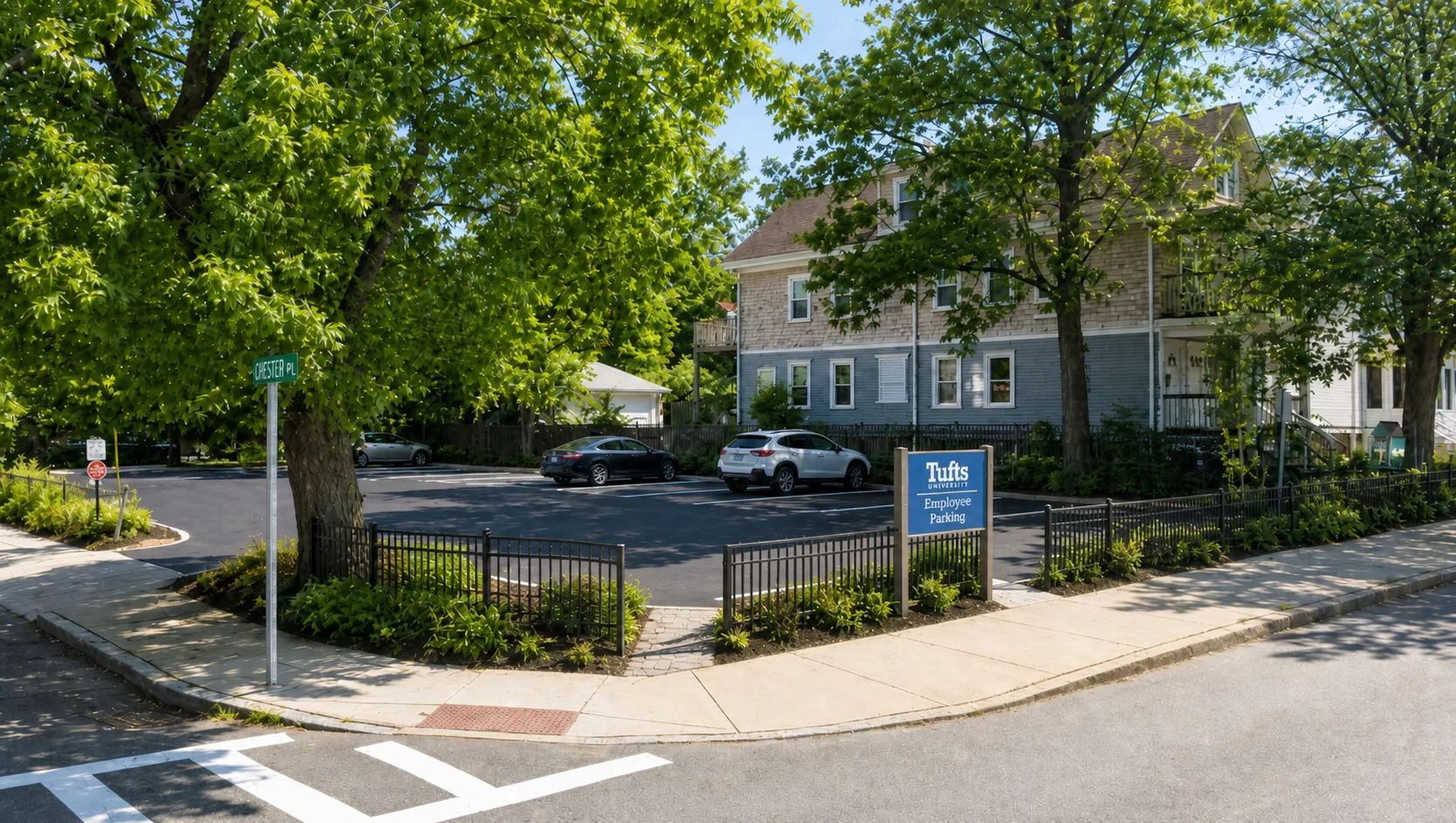
101 Winthrop St
Parking, access, and future flexibility
Separate 0.20 acre parcel currently used for surface parking.
Separate zoning profile should be reviewed for parking, access, and use constraints.
Parking materially improves the main building's operating flexibility.
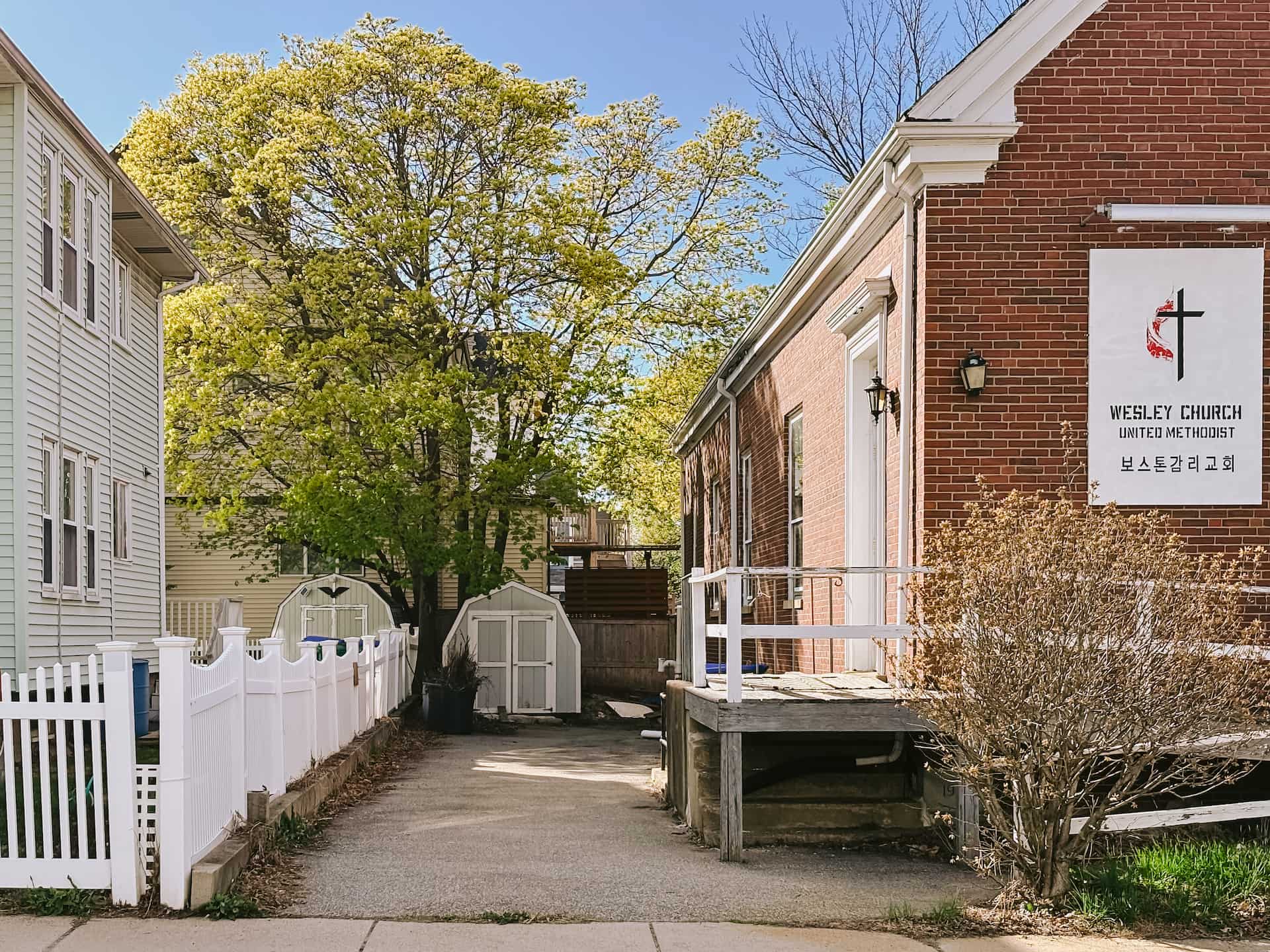
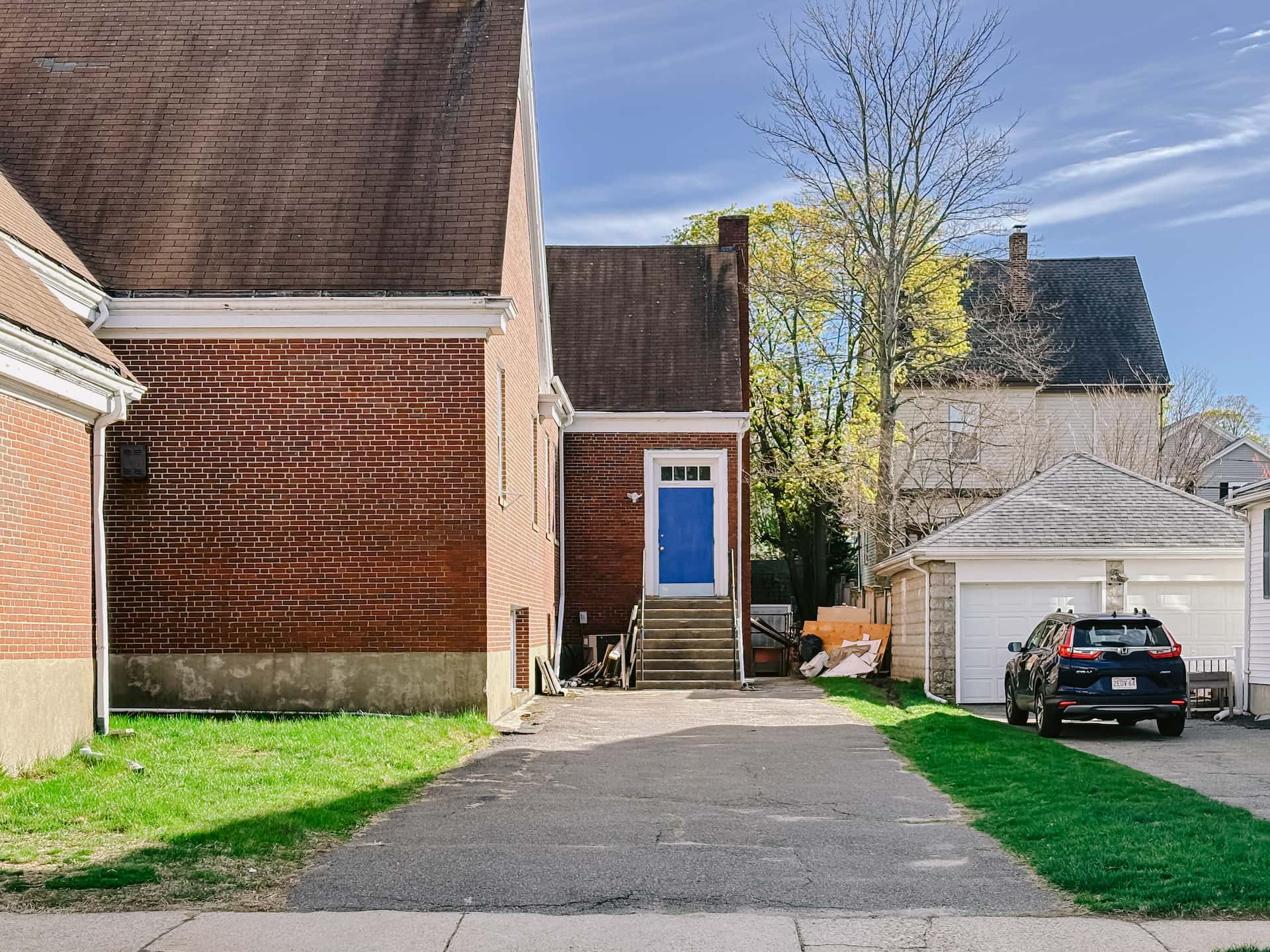
Existing Site Access
Side entry and exterior accessDriveway and rear access
Floor Plans
Existing layout and room program
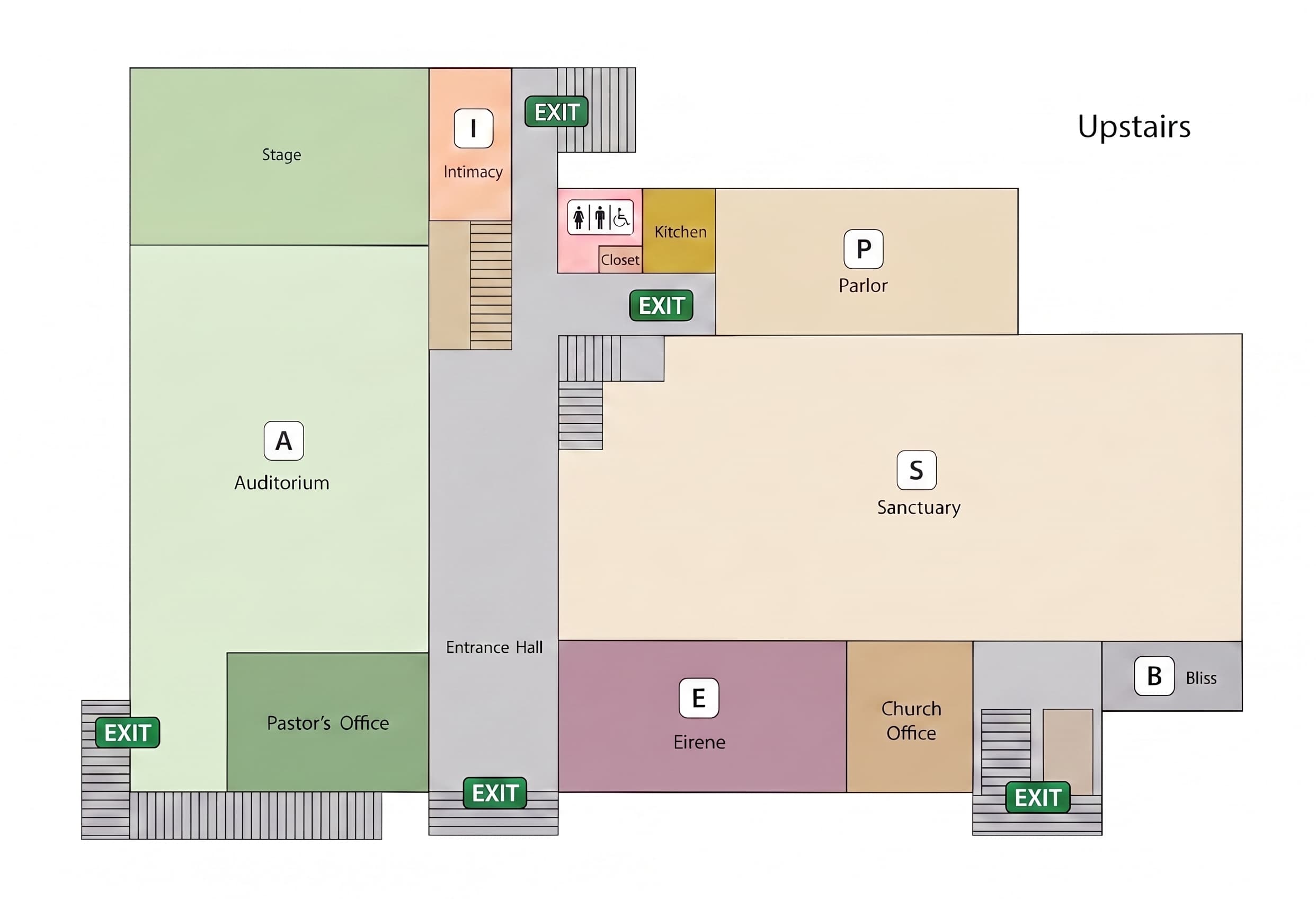
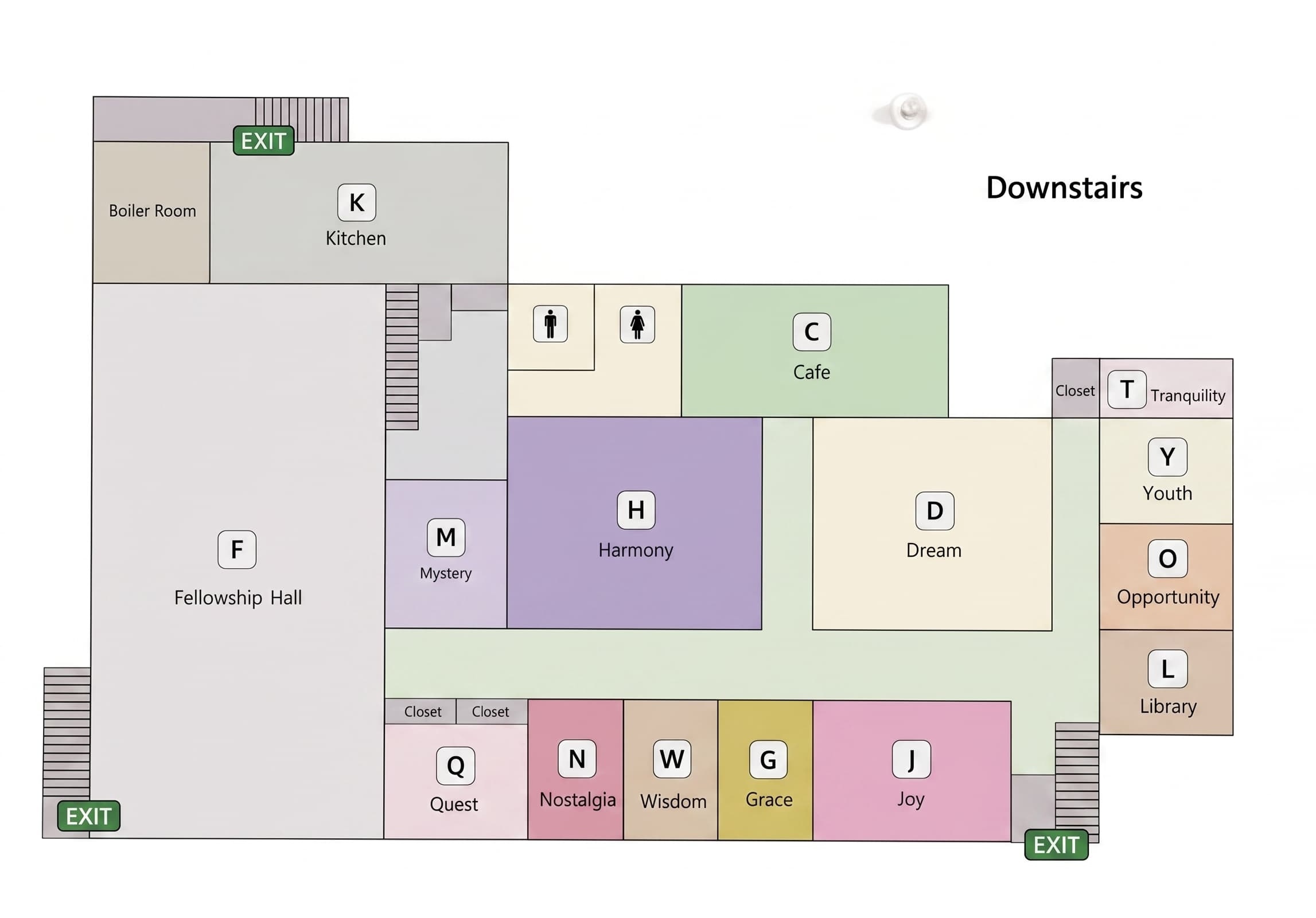
The building includes large gathering spaces on both levels, multiple classroom or
office rooms, kitchens, restrooms, and several exterior exits. These plans help reviewers
understand the current operating layout before starting reuse, programming, or renovation
studies.
Upstairs floor plan - main assembly hall, auditorium, meeting rooms, offices, kitchen, and exitsDownstairs floor plan - community hall, cafe, kitchen, classrooms, library, and exits
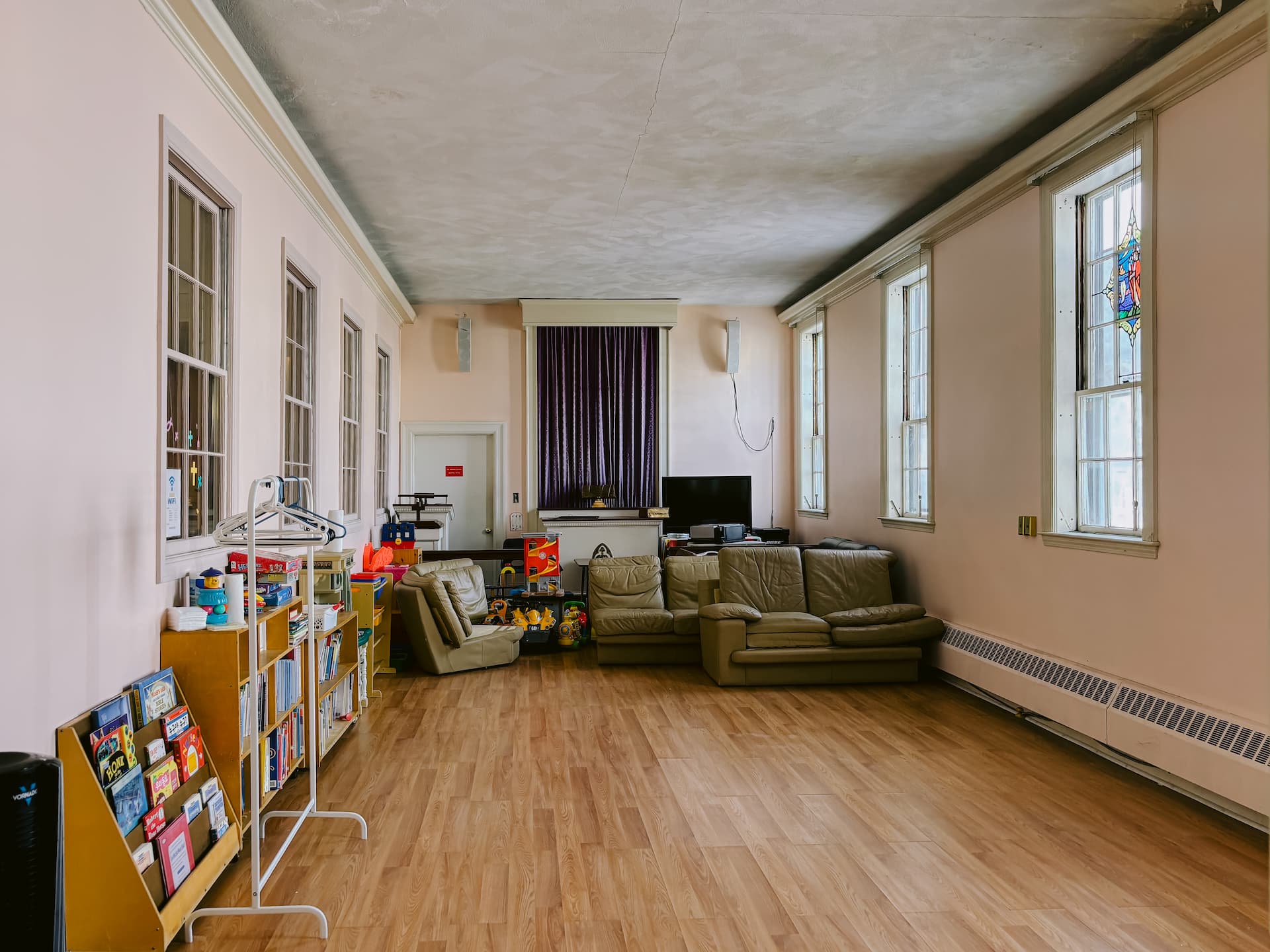
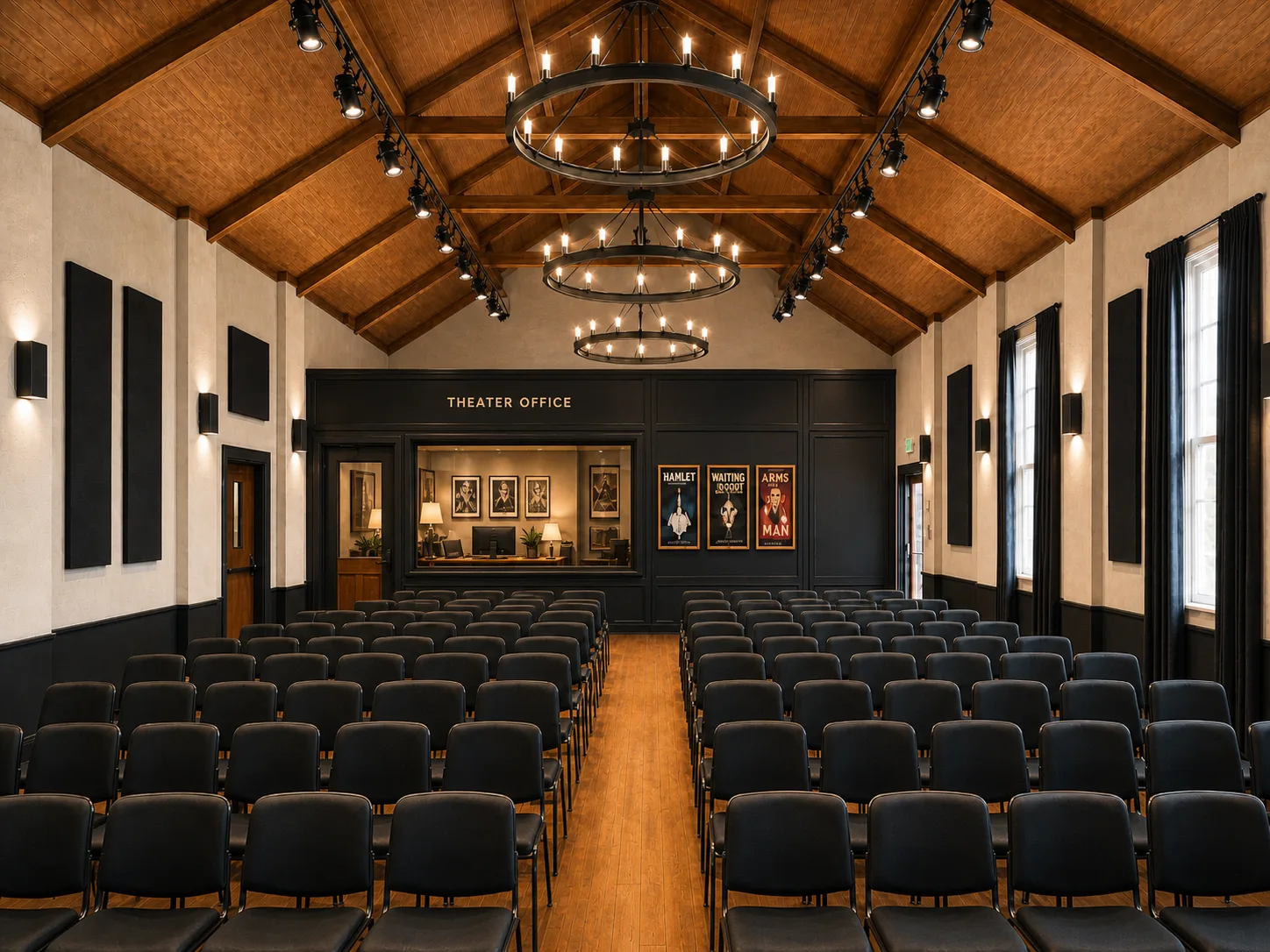
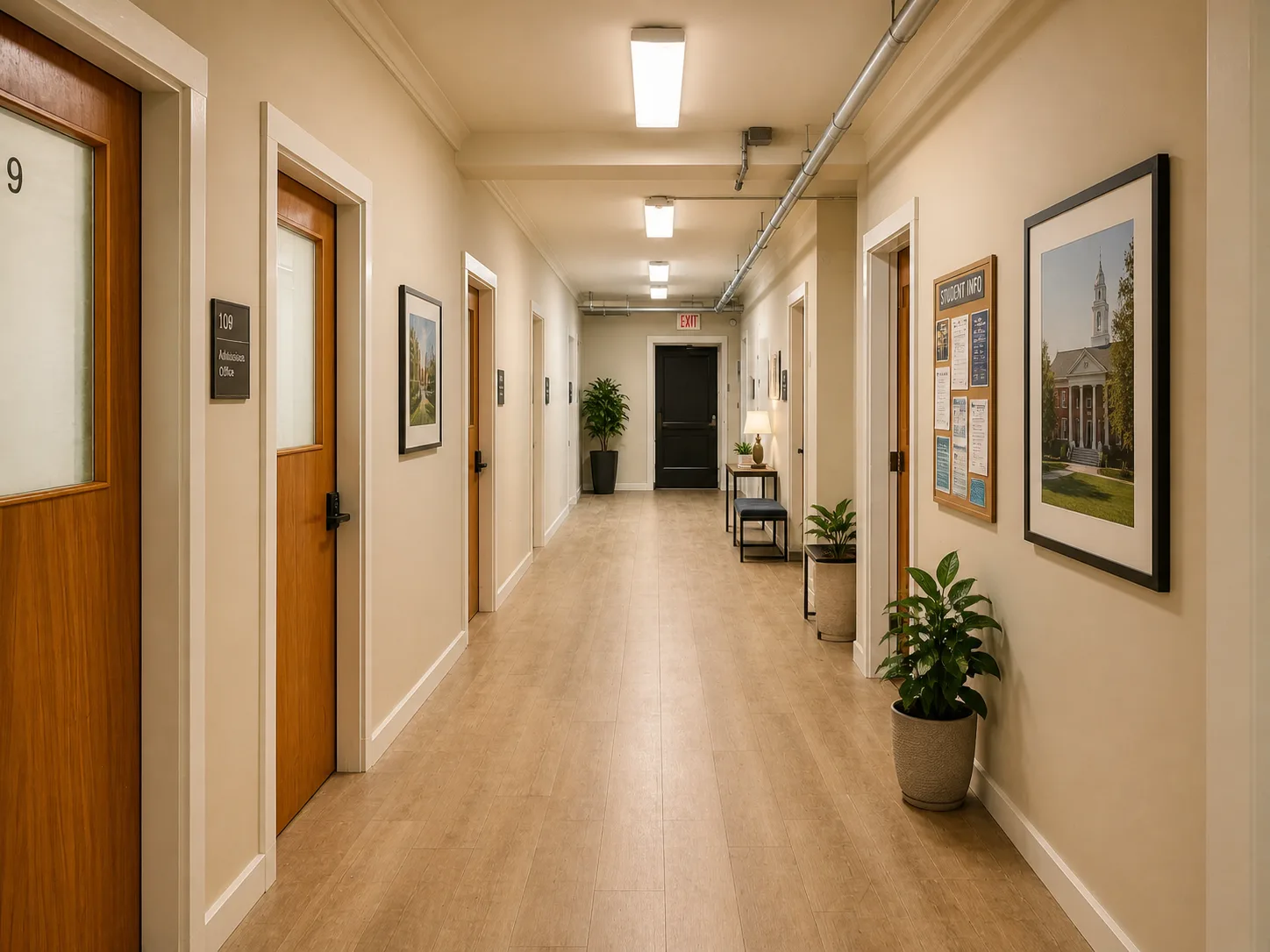
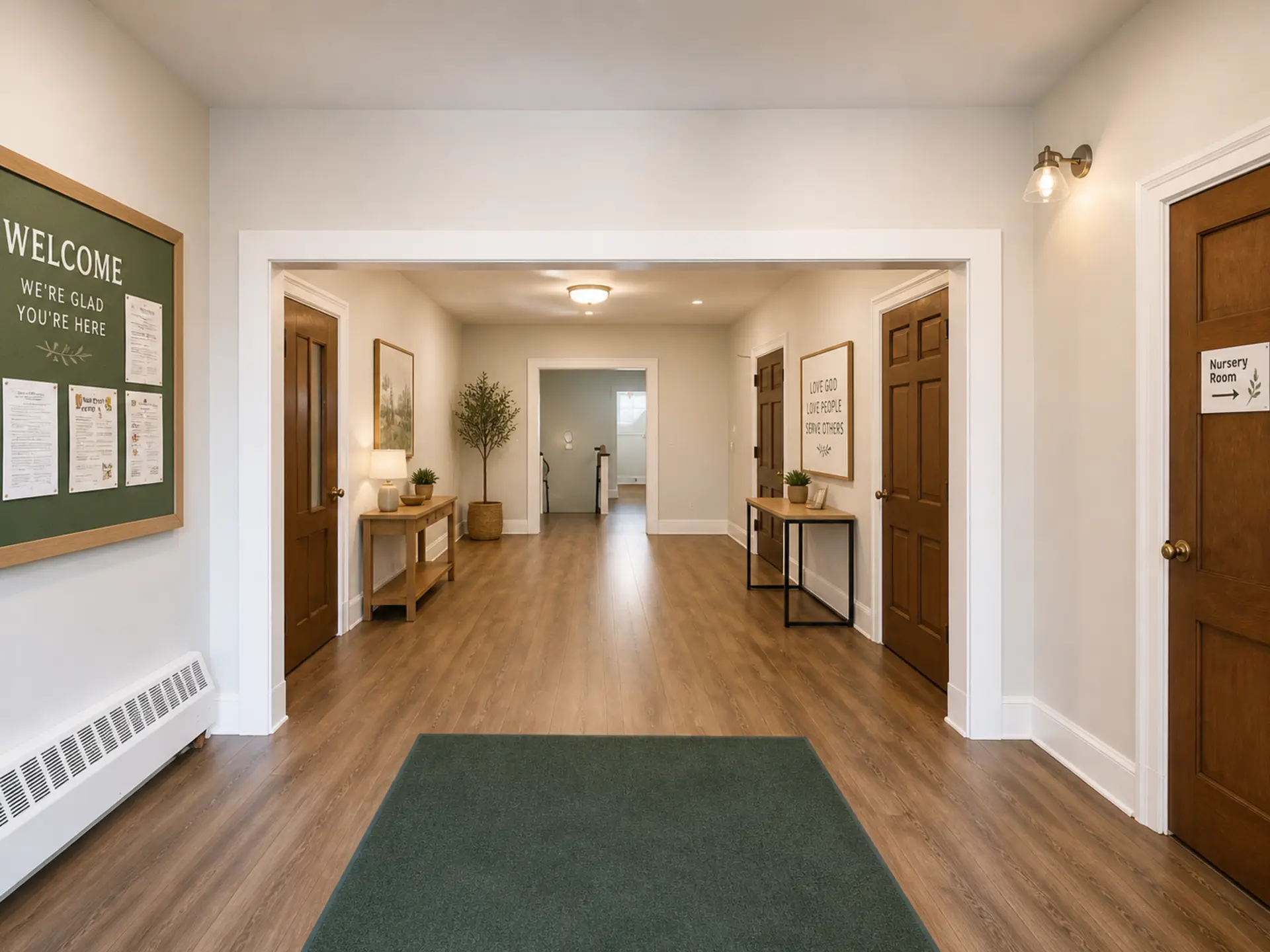
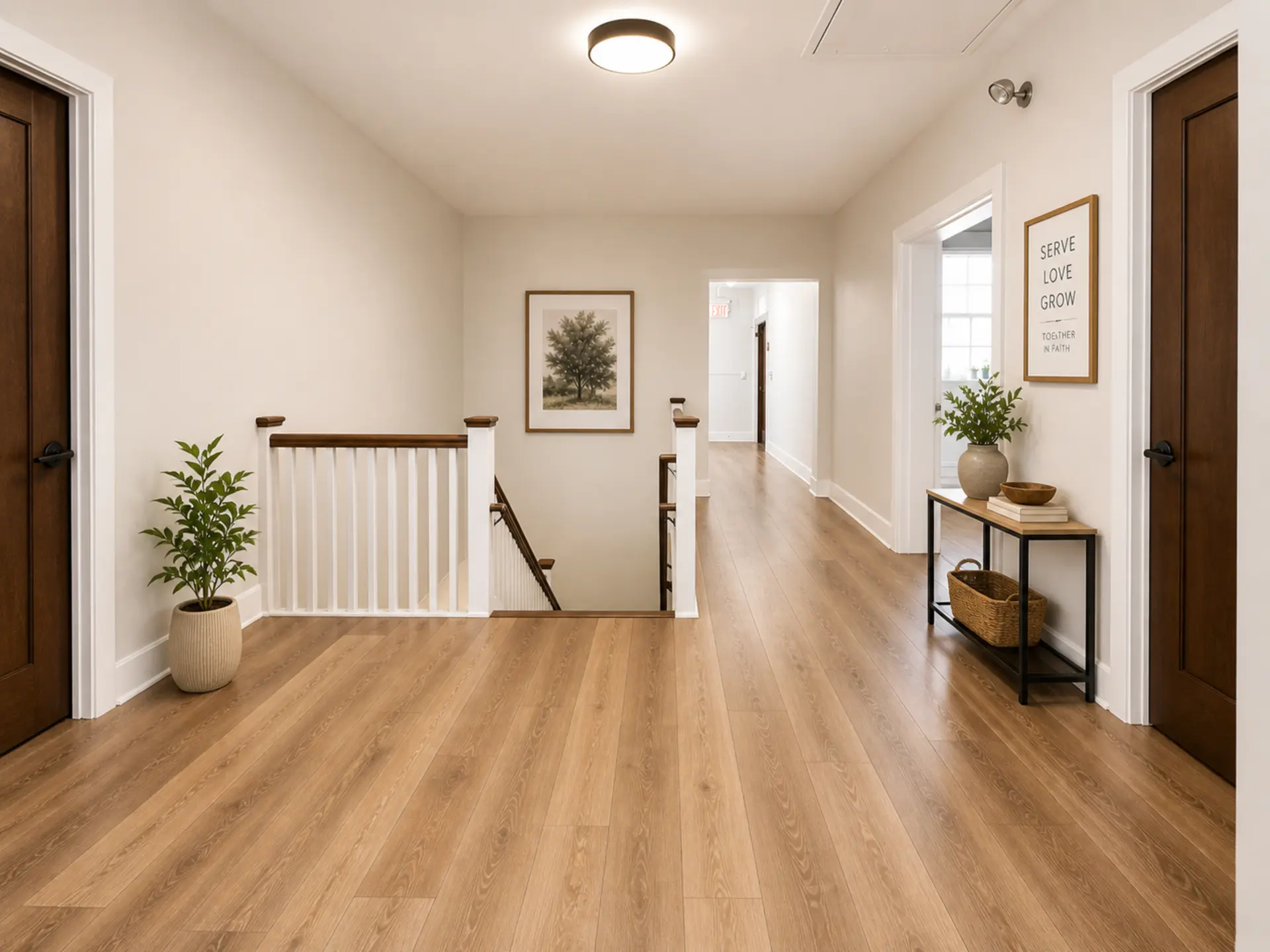
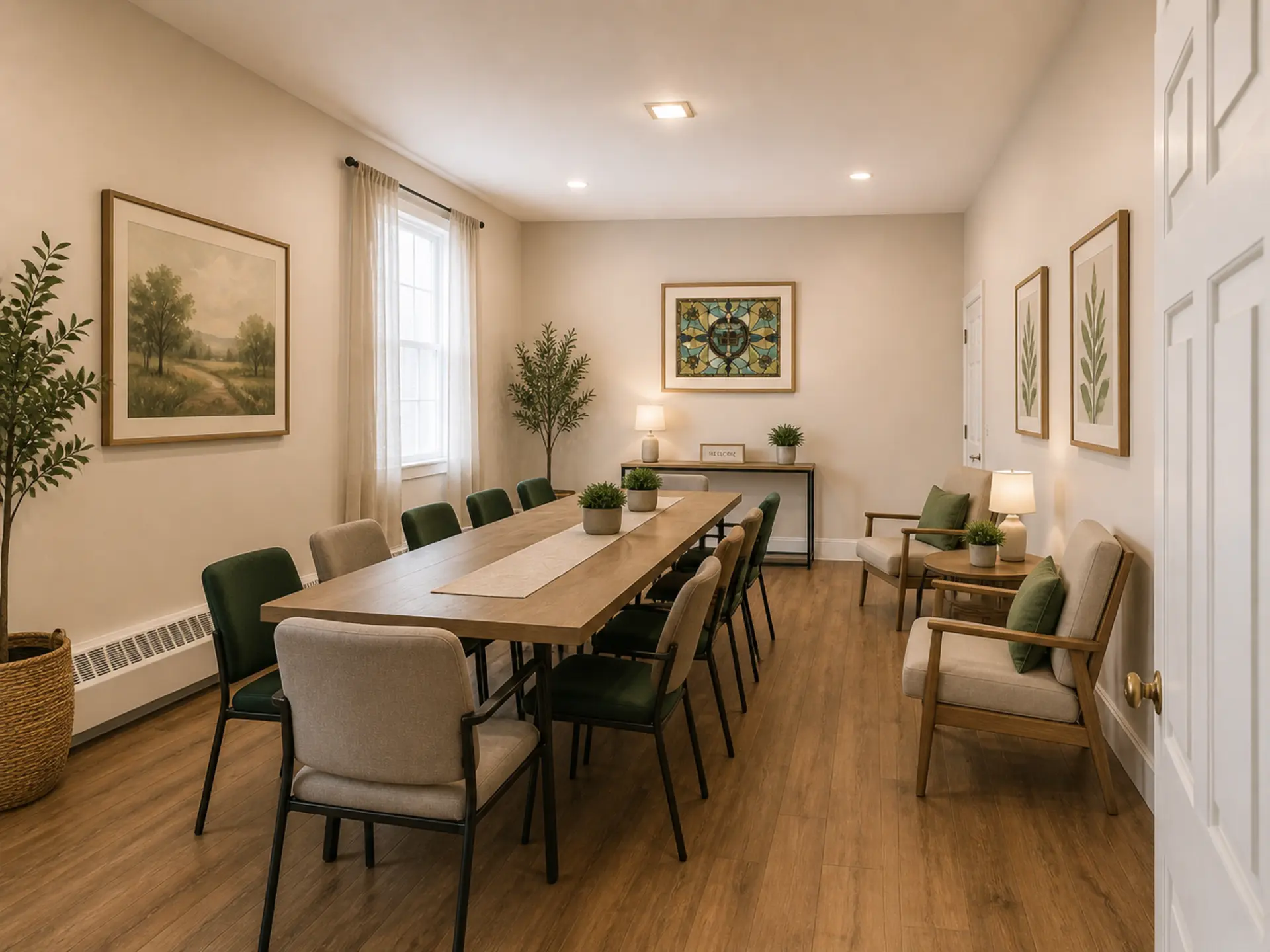
These paired images use current room photos and virtual staging to show potential
campus-support scenarios. They are concept visuals only and should be evaluated
separately from physical condition, code, cost, and approval diligence.
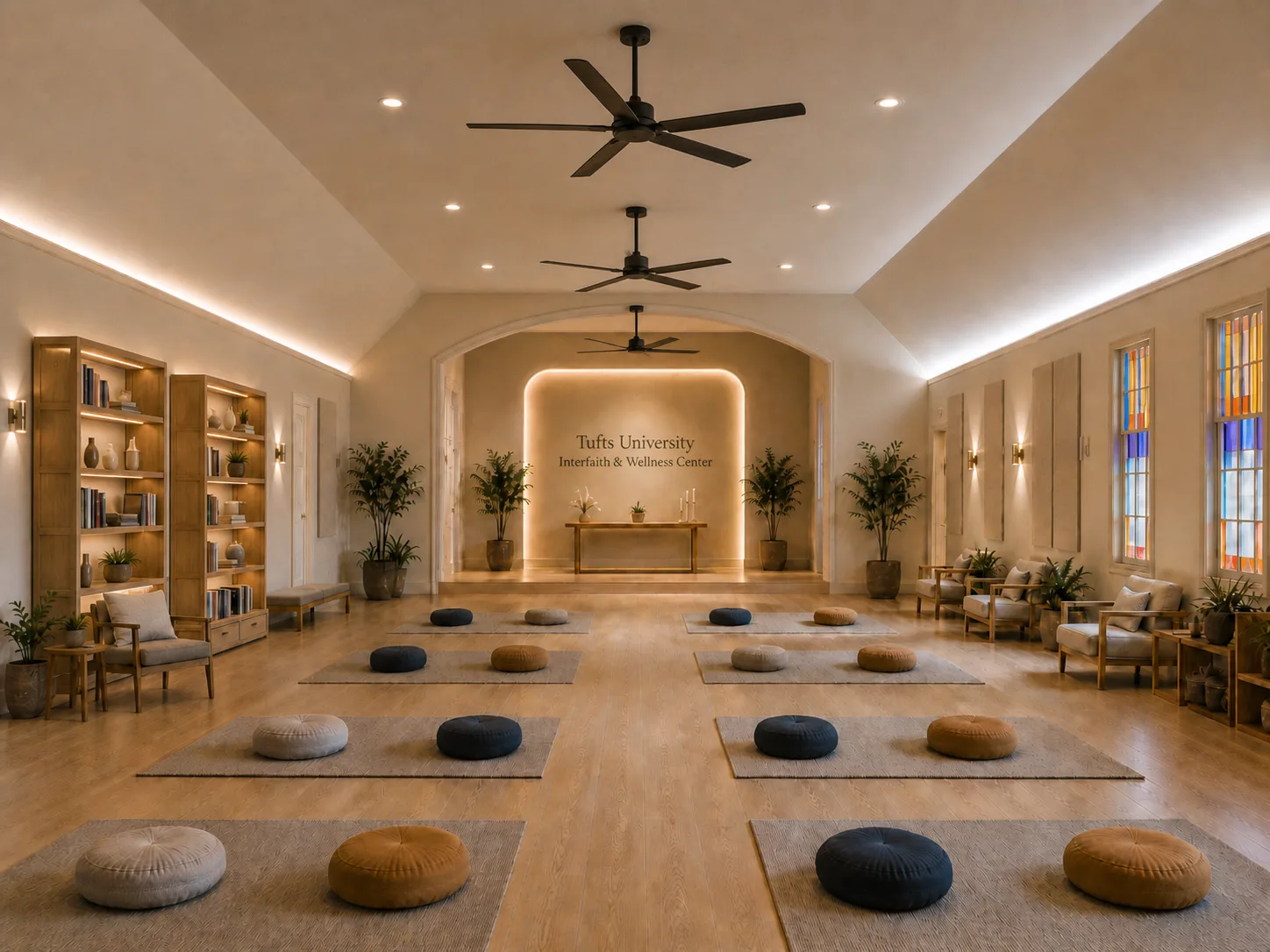
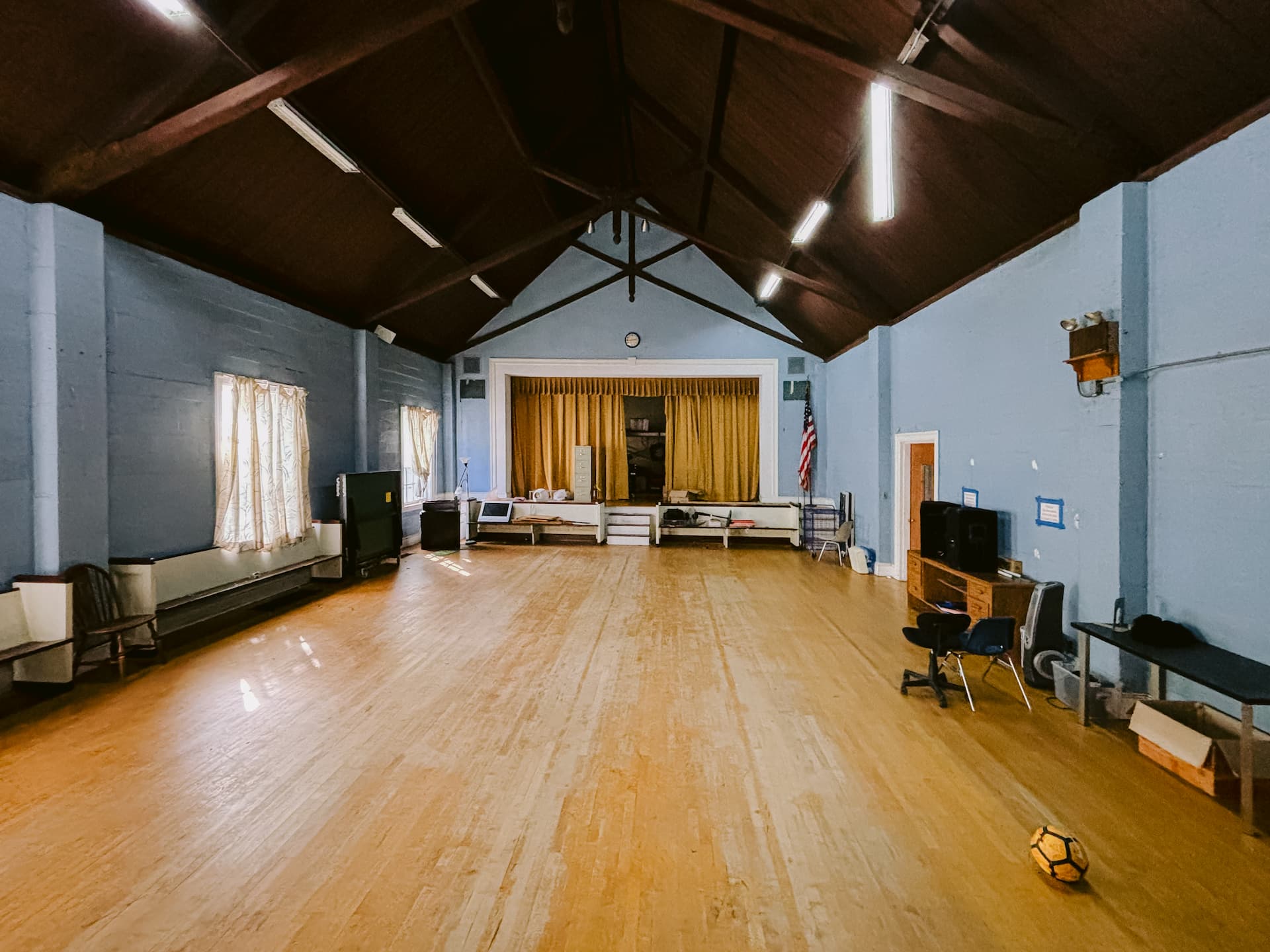
Virtually Staged Before / After Potential
CurrentPotential
Interfaith and wellness center concept
Shows how the existing main assembly hall volume could be studied for quiet interfaith, wellness, reflection, and small gathering use.
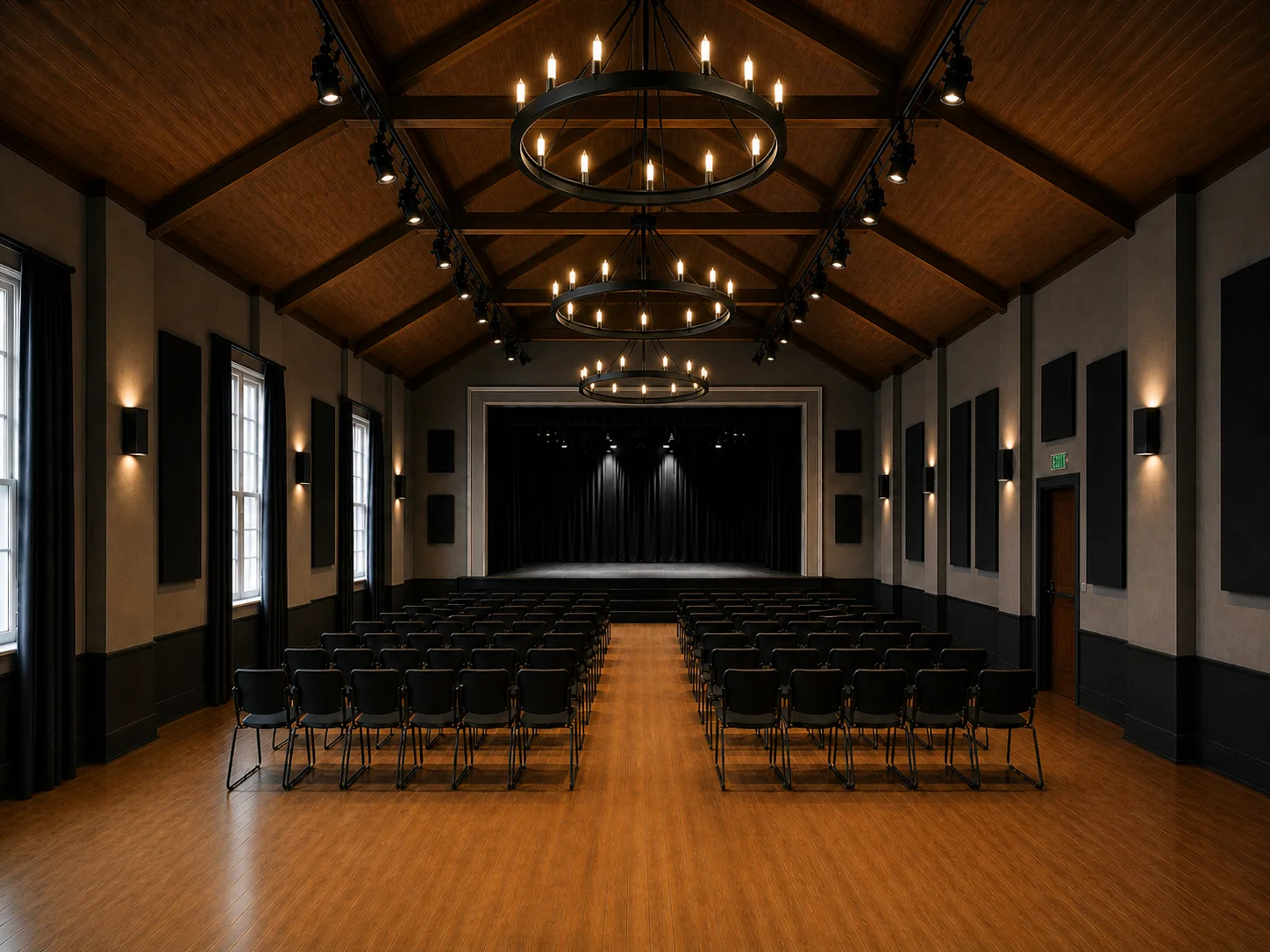
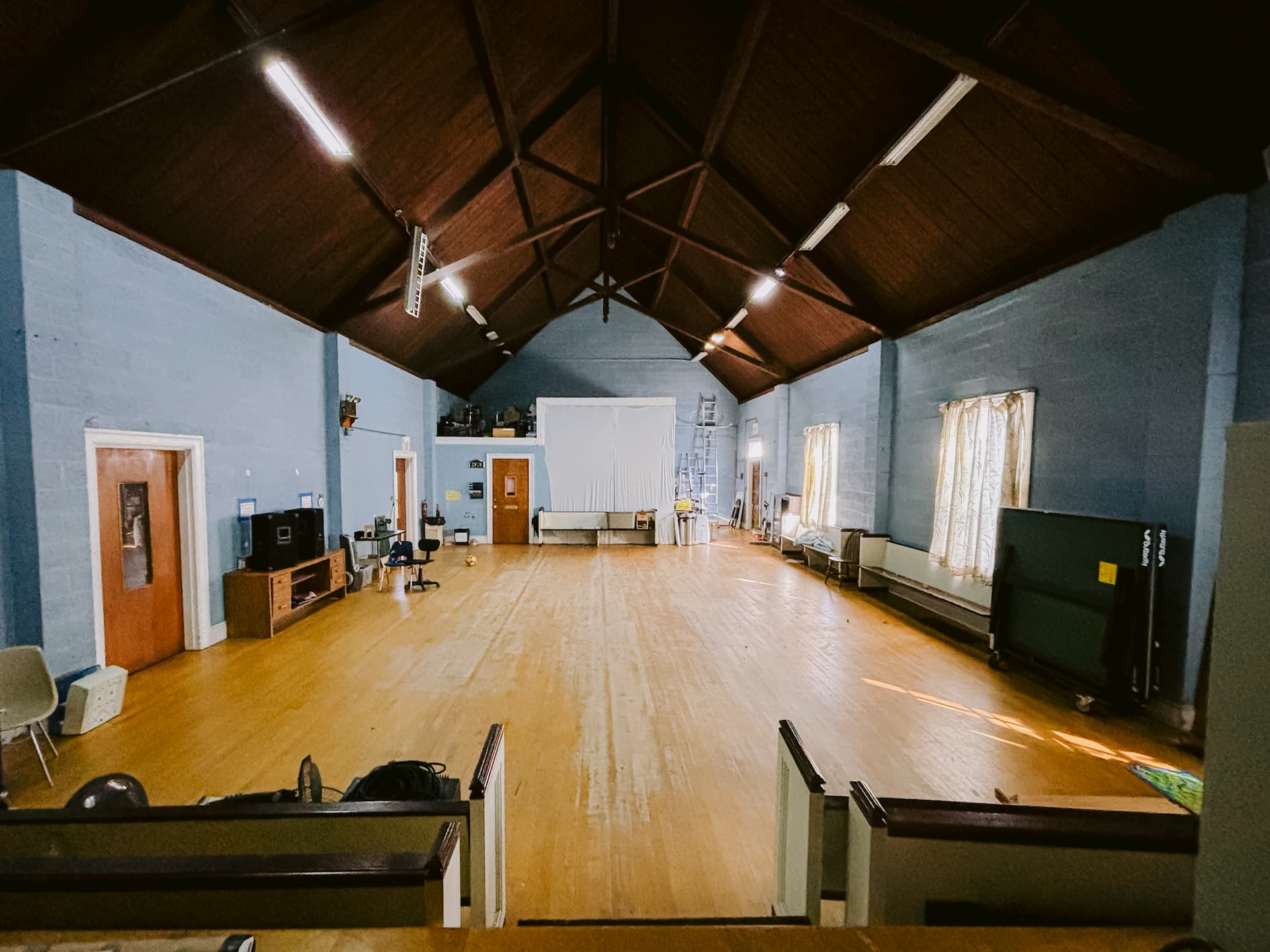
CurrentPotential
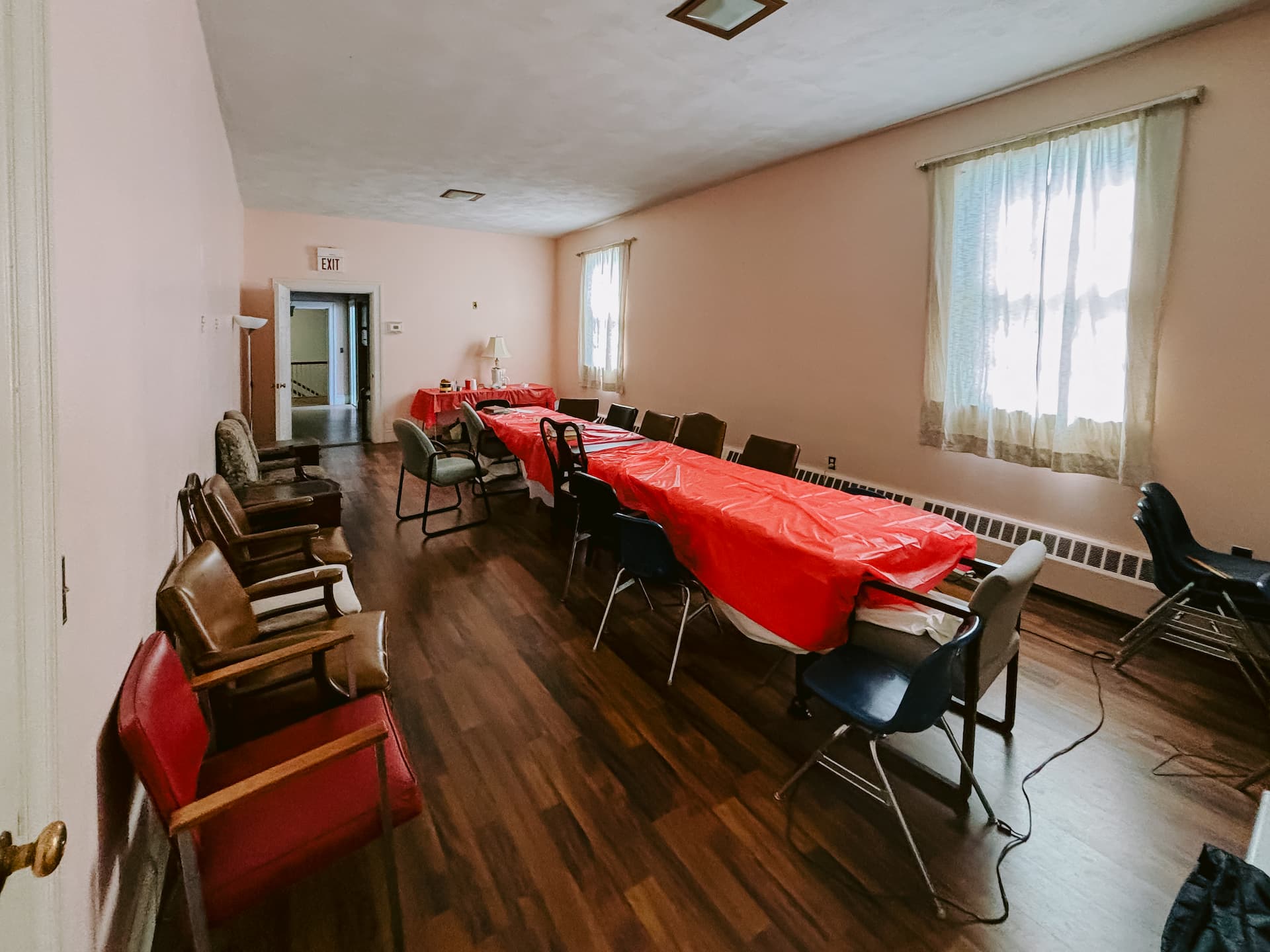
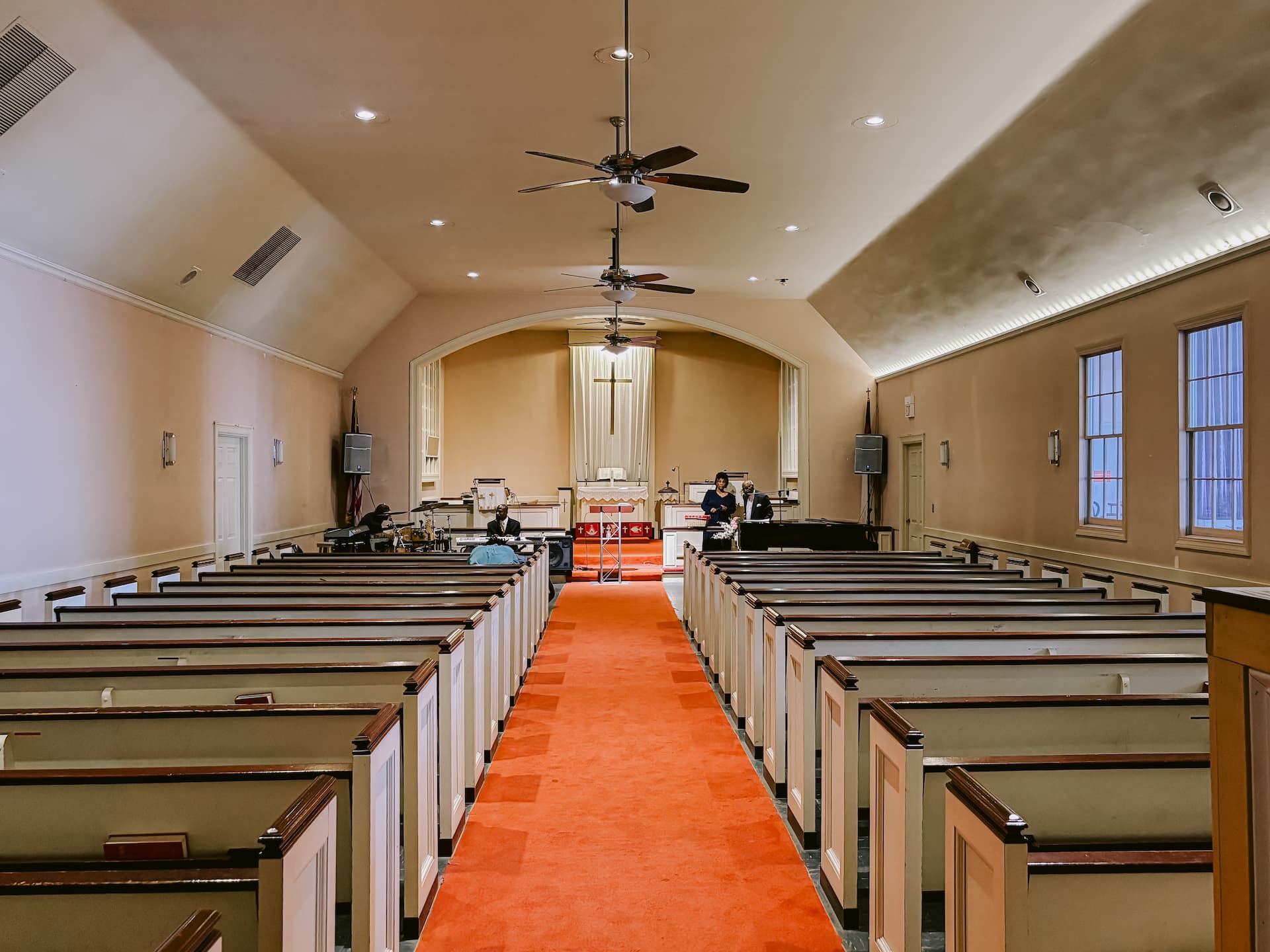
Performance / event / function hall concept
Shows how the hall could be studied as a flexible university venue for lectures, ceremonies, performances, rehearsals, meetings, and function-space use.
CurrentPotential
Lecture / event seating concept
Shows a seated event layout that could support university lectures, performances, ceremonies, community gatherings, and formal functions.
CurrentPotential
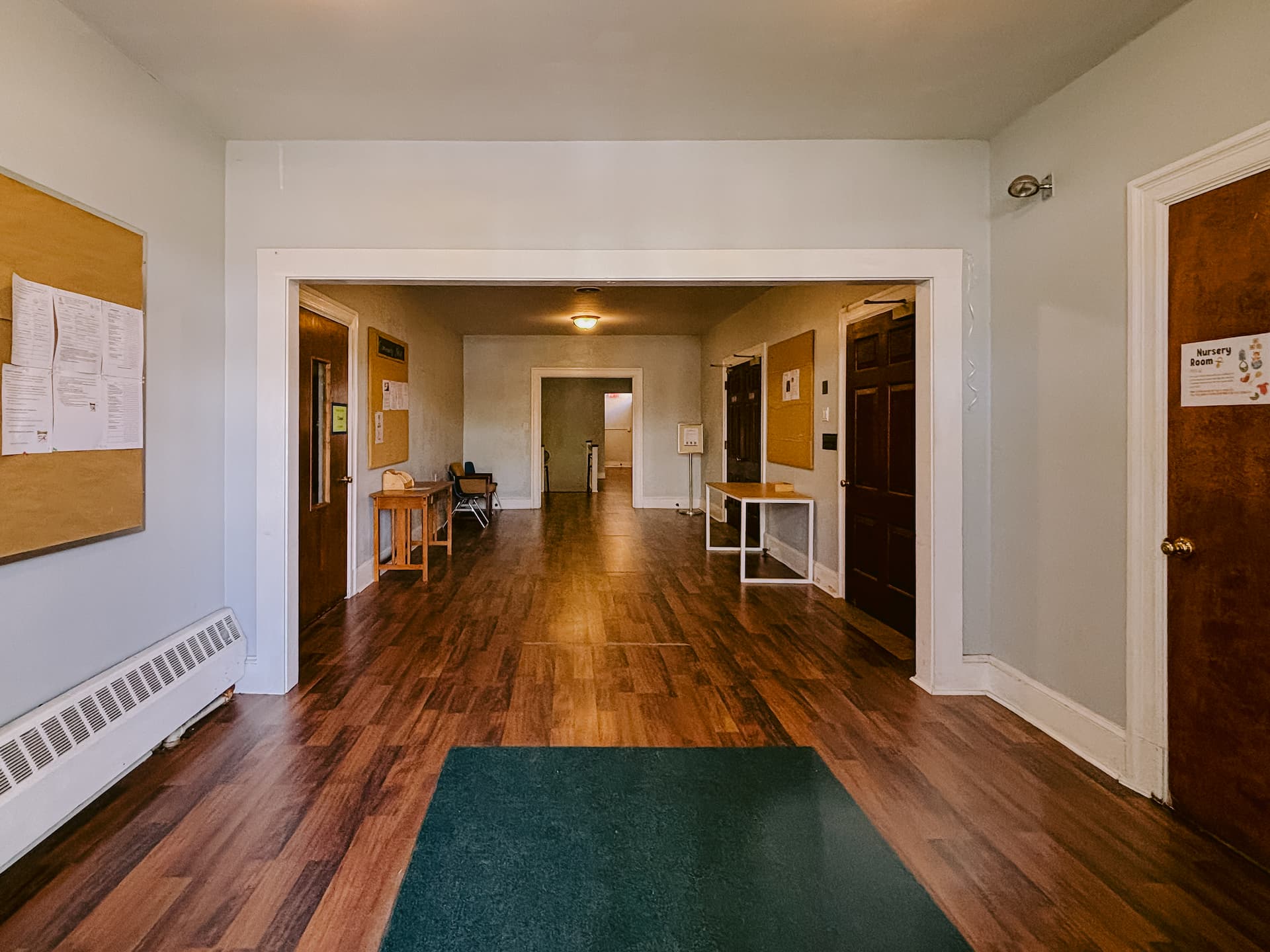
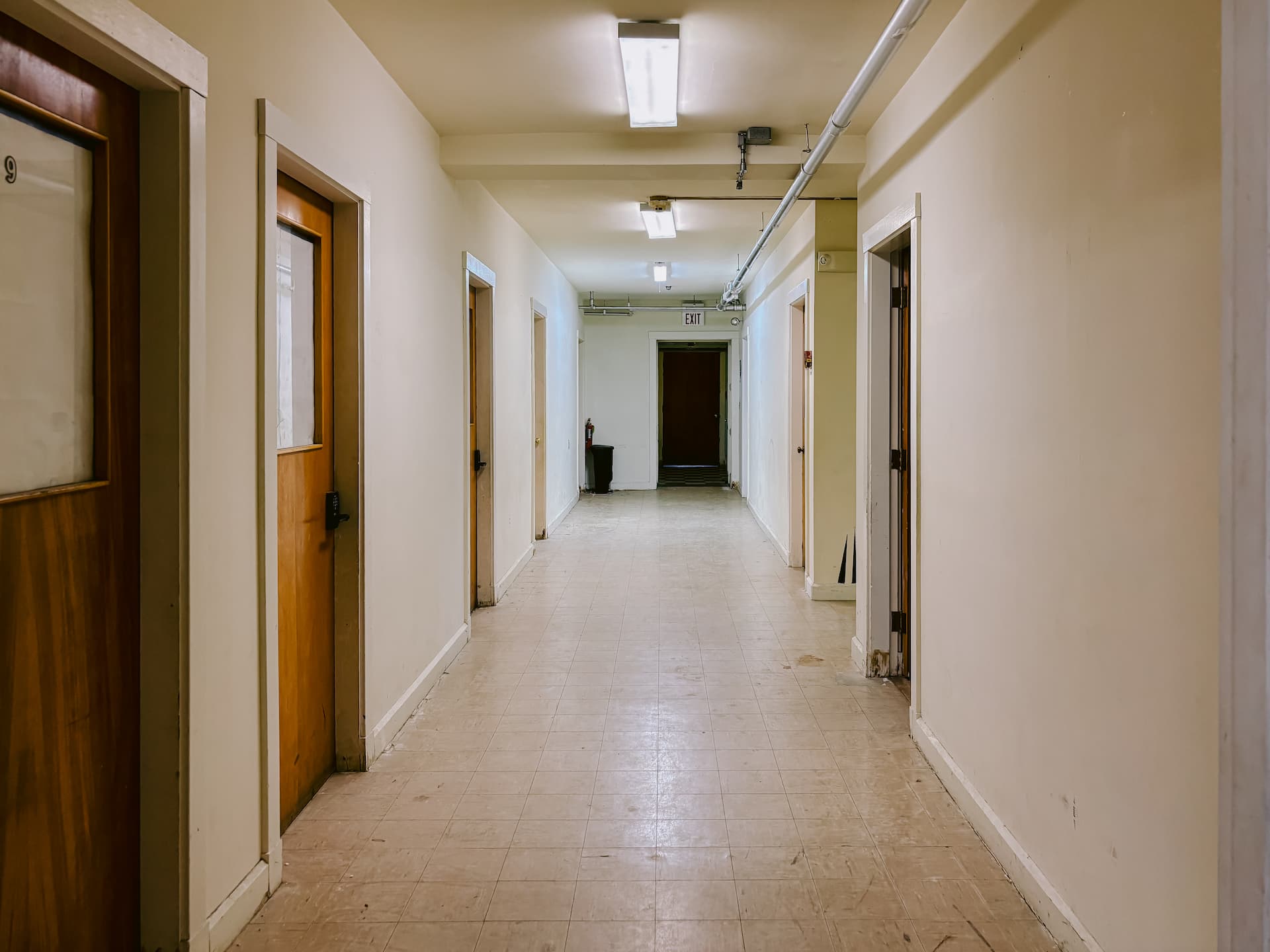
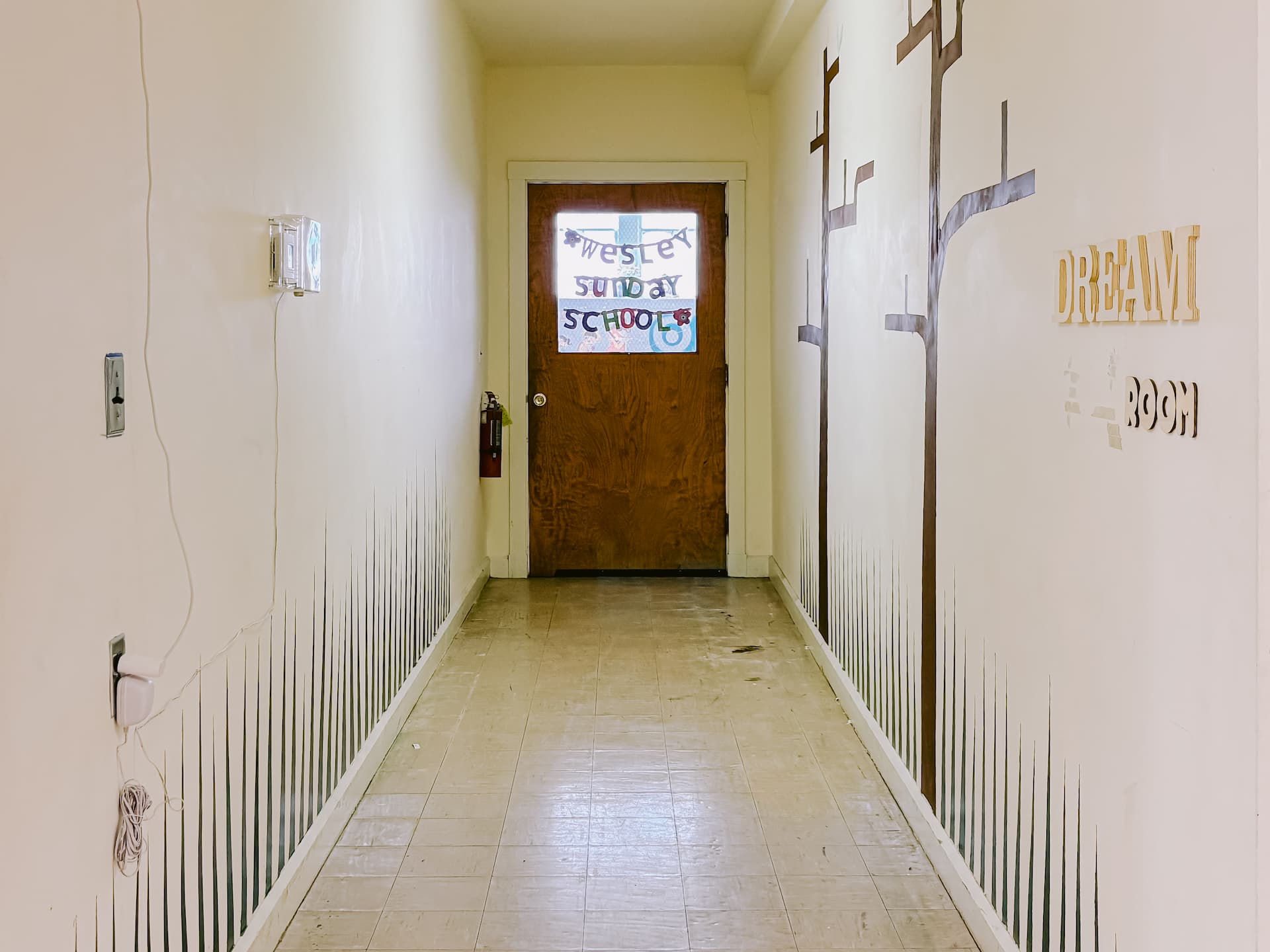
Office corridor concept
Shows a more finished corridor condition for admin, faculty overflow, counseling, or student-service offices.
CurrentPotential
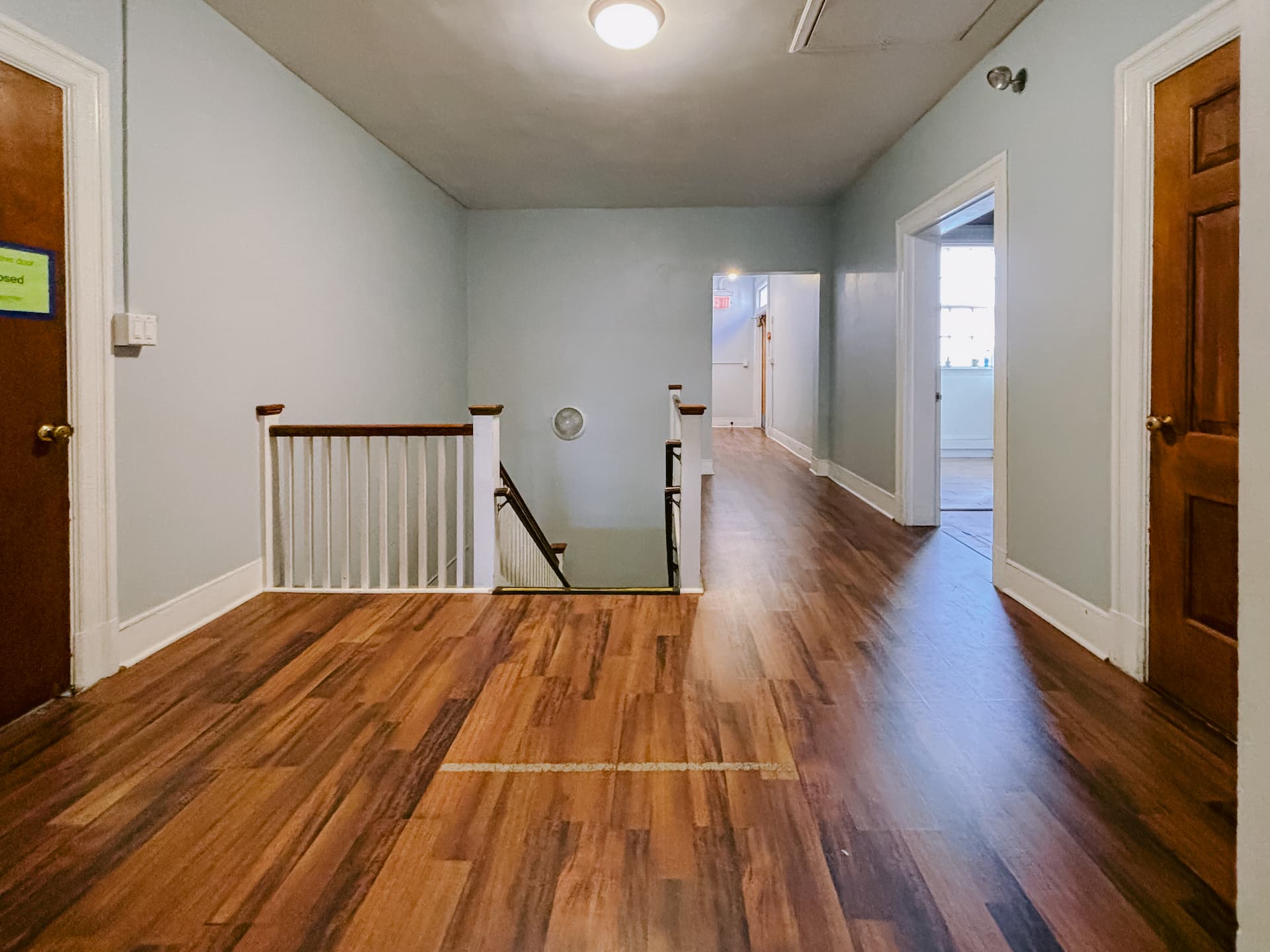
Upper floor hall concept
Shows how the existing circulation could present with coordinated finishes, brighter lighting, and a more polished arrival sequence.
CurrentPotential
Upper floor circulation concept
Shows a cleaner finish strategy for the upper floor hallways and connecting areas.
CurrentPotential
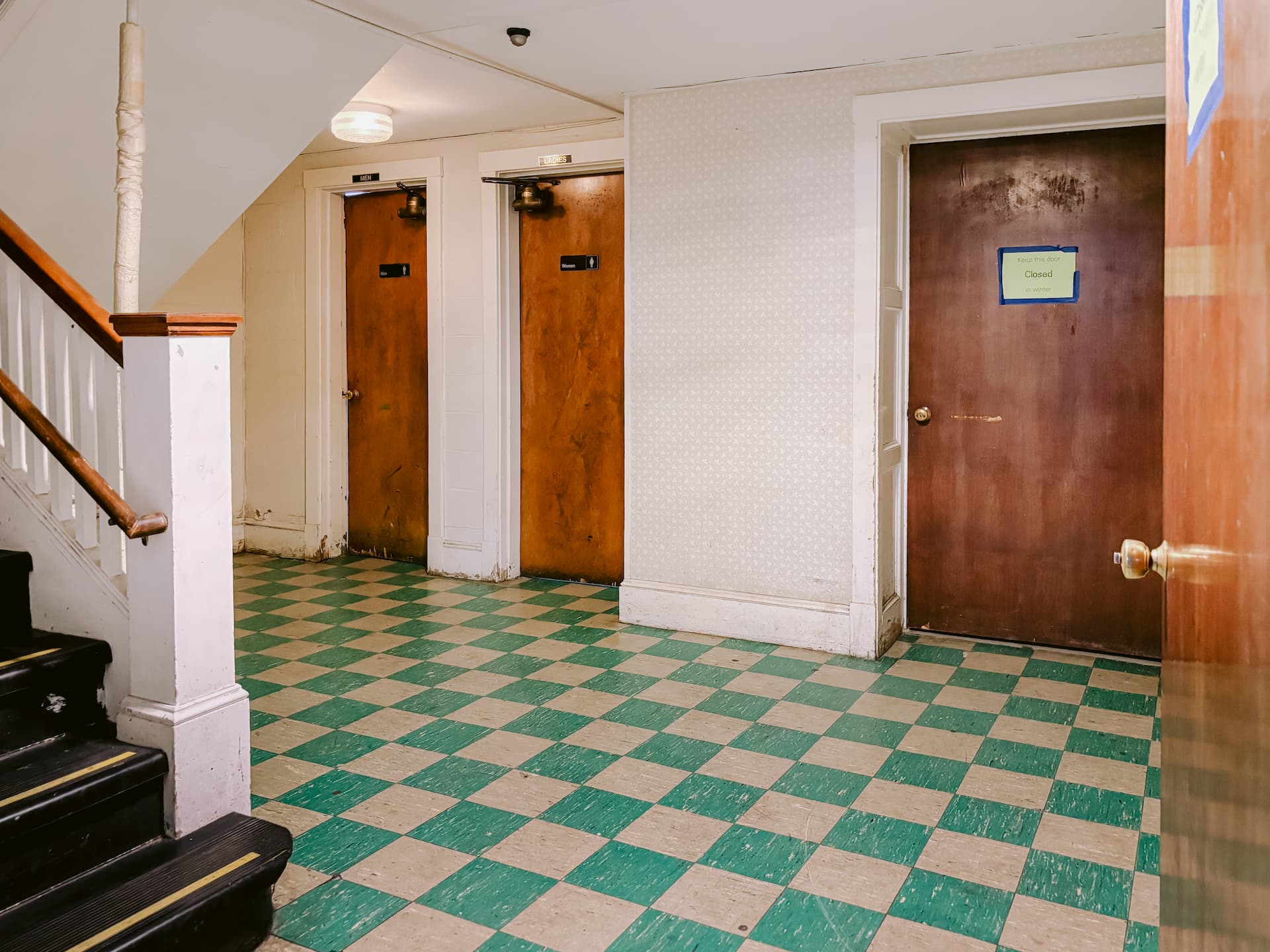
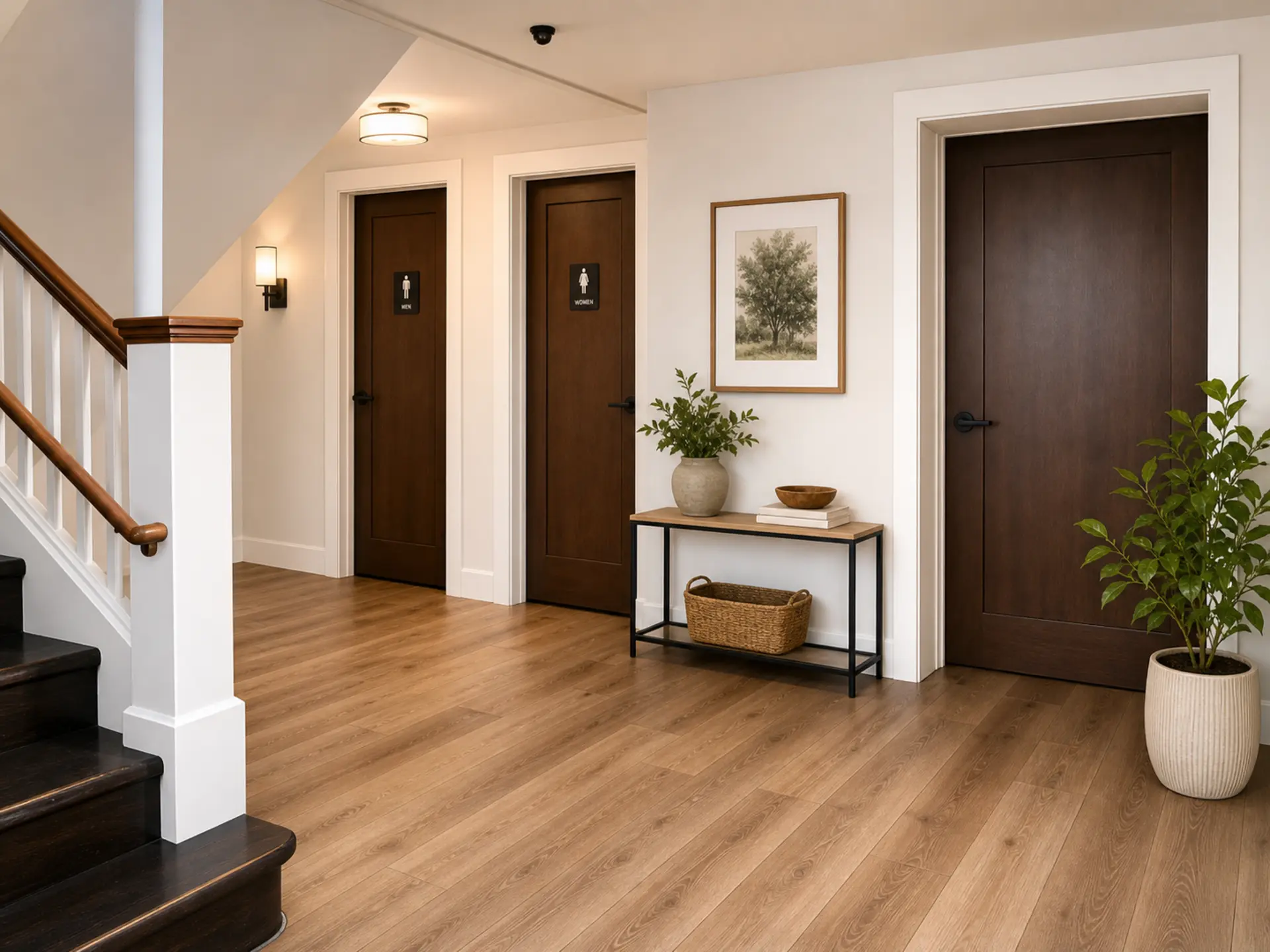
Bathroom corridor concept
Shows a more finished restroom corridor presentation with updated doors, lighting, flooring, and wayfinding.
CurrentPotential
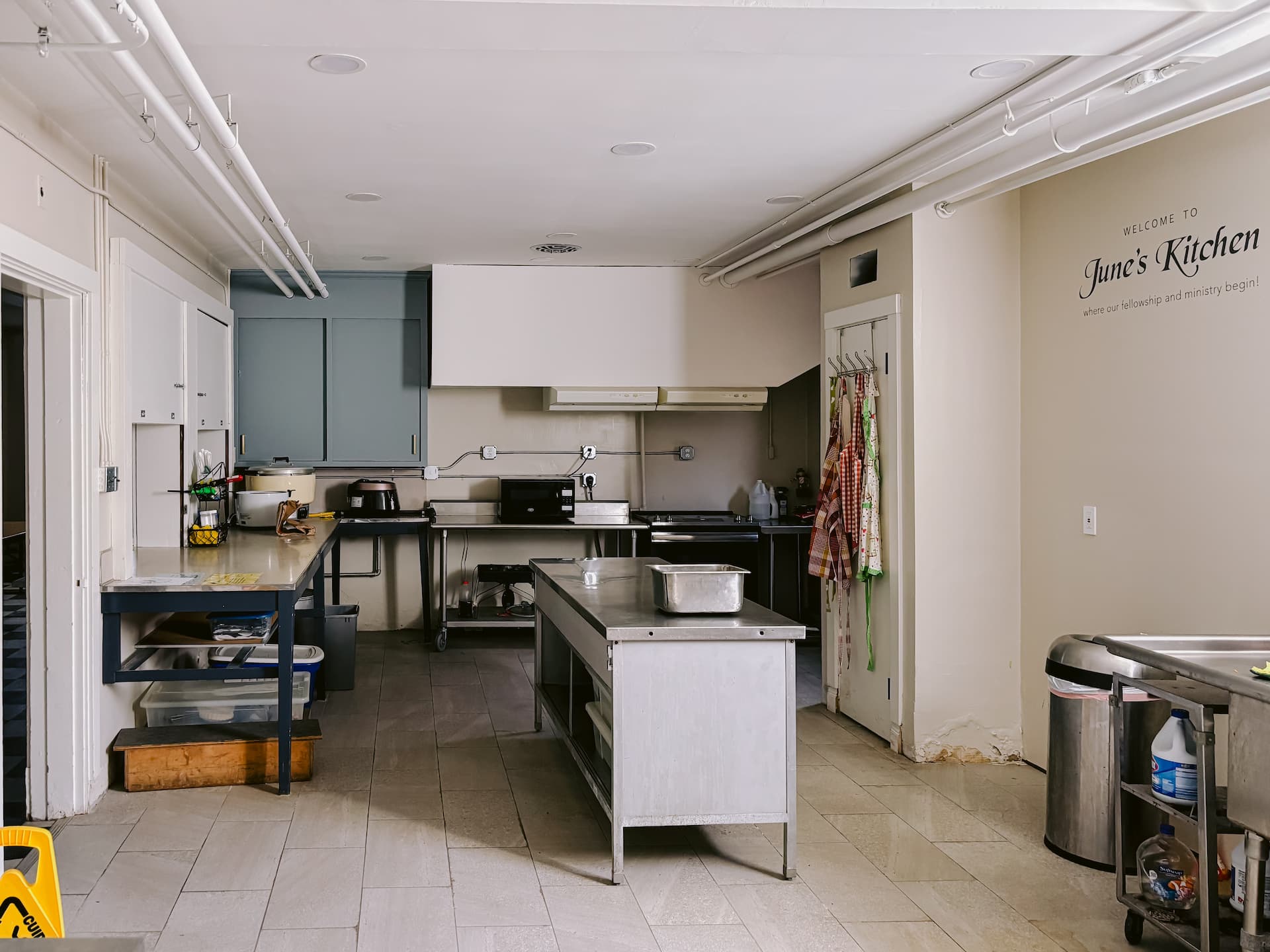
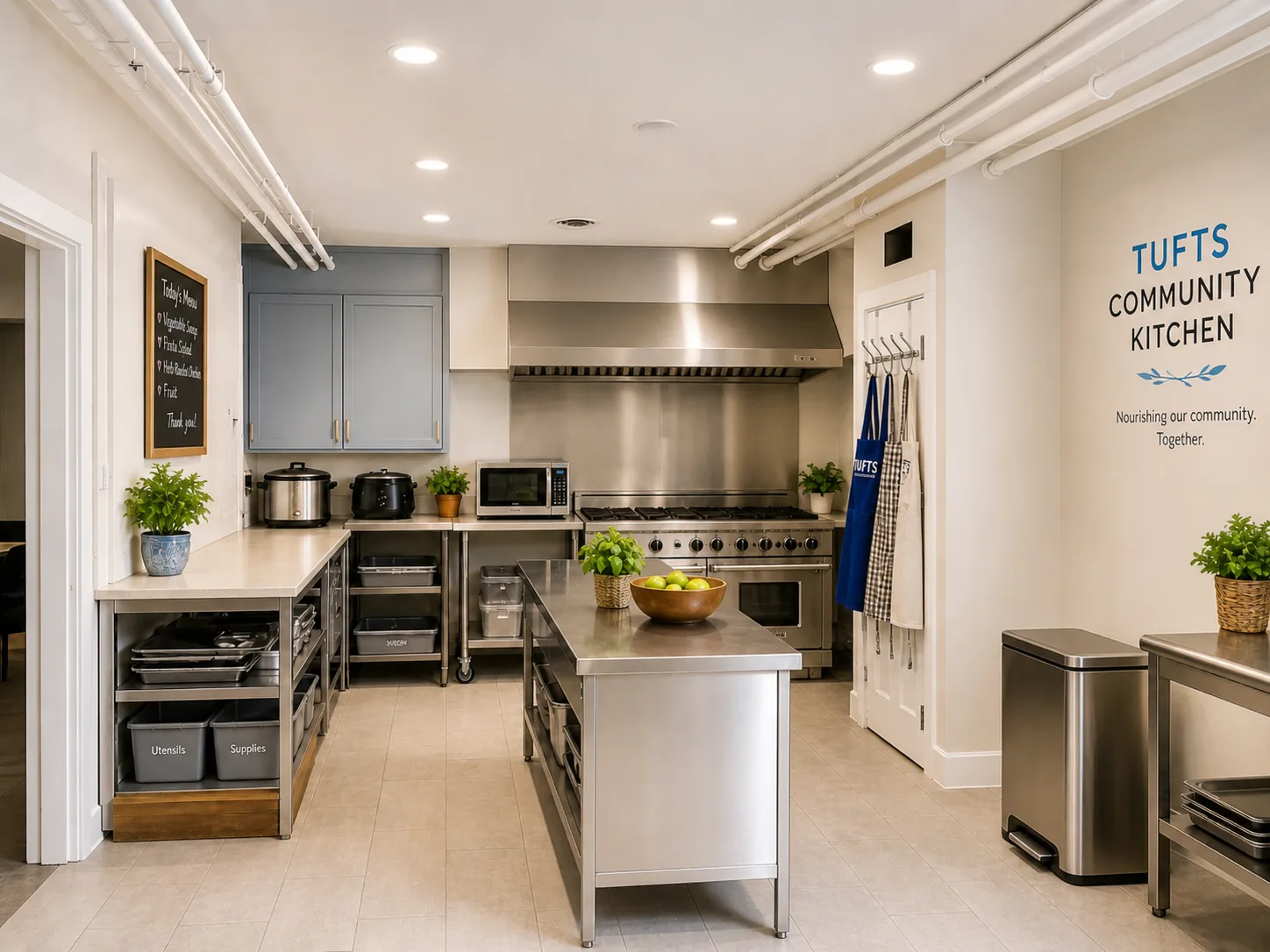
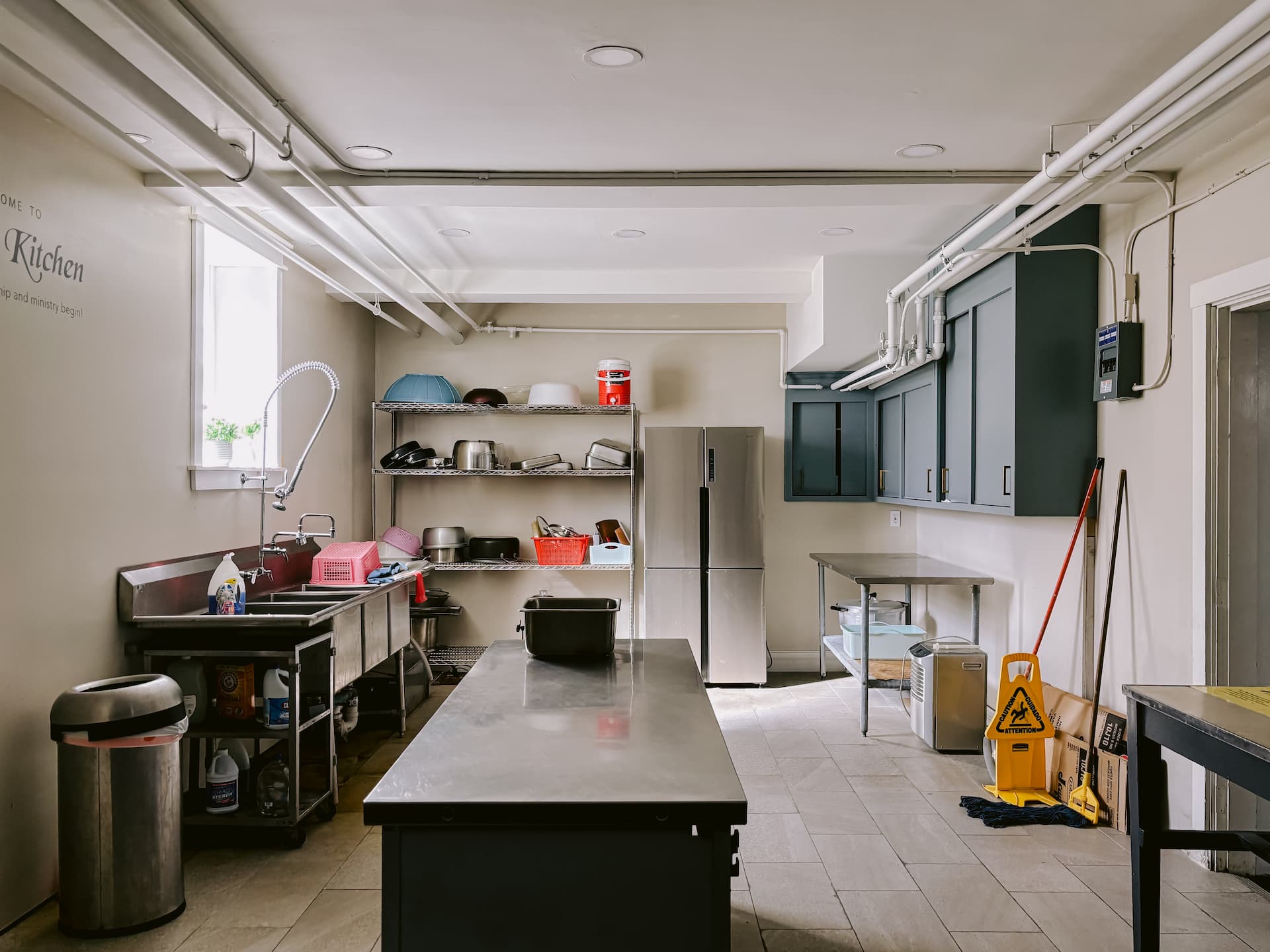
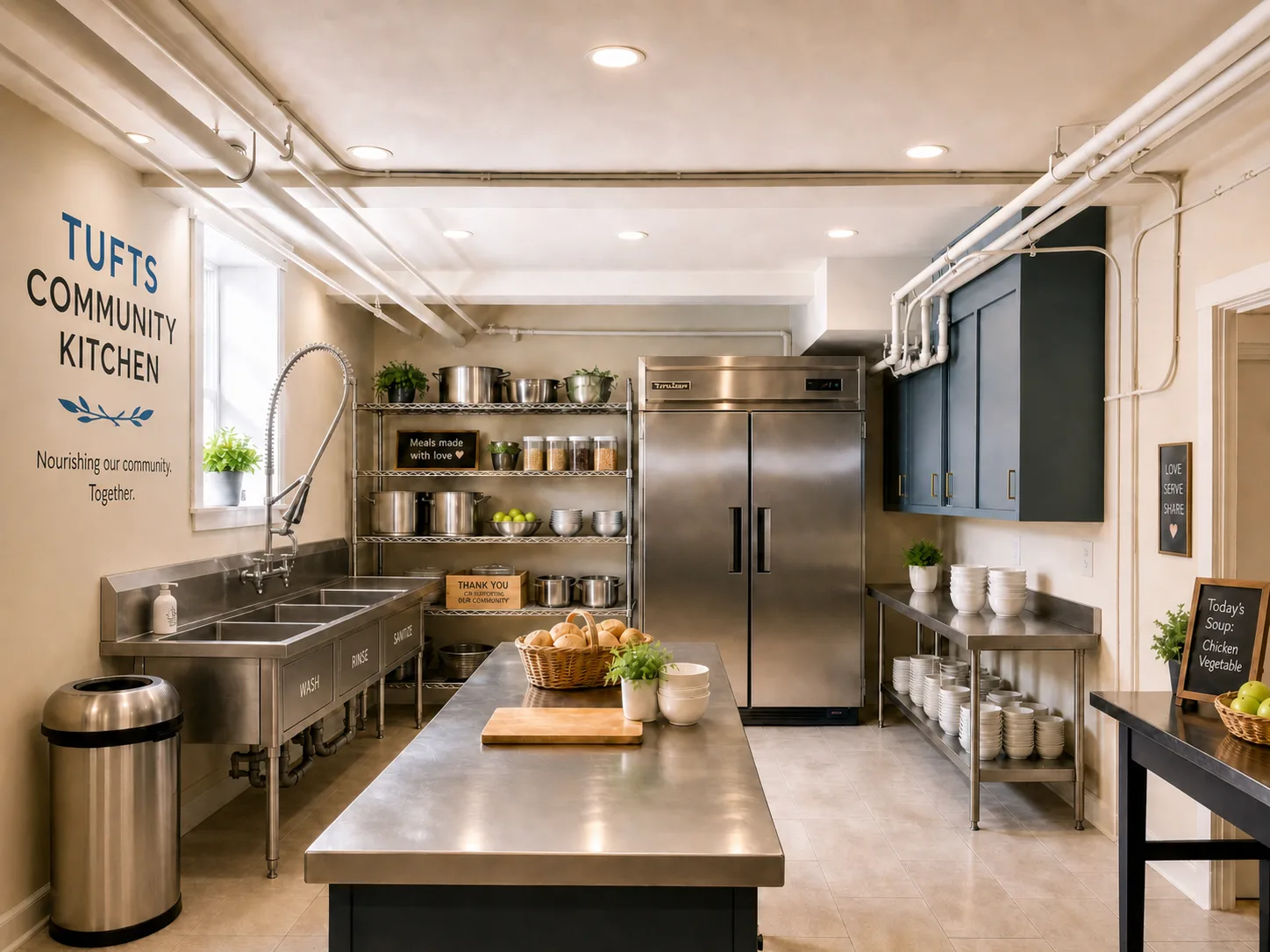
Community kitchen service concept
Shows how the existing kitchen infrastructure could support food access, service-learning, and recurring community meal programs.
CurrentPotential
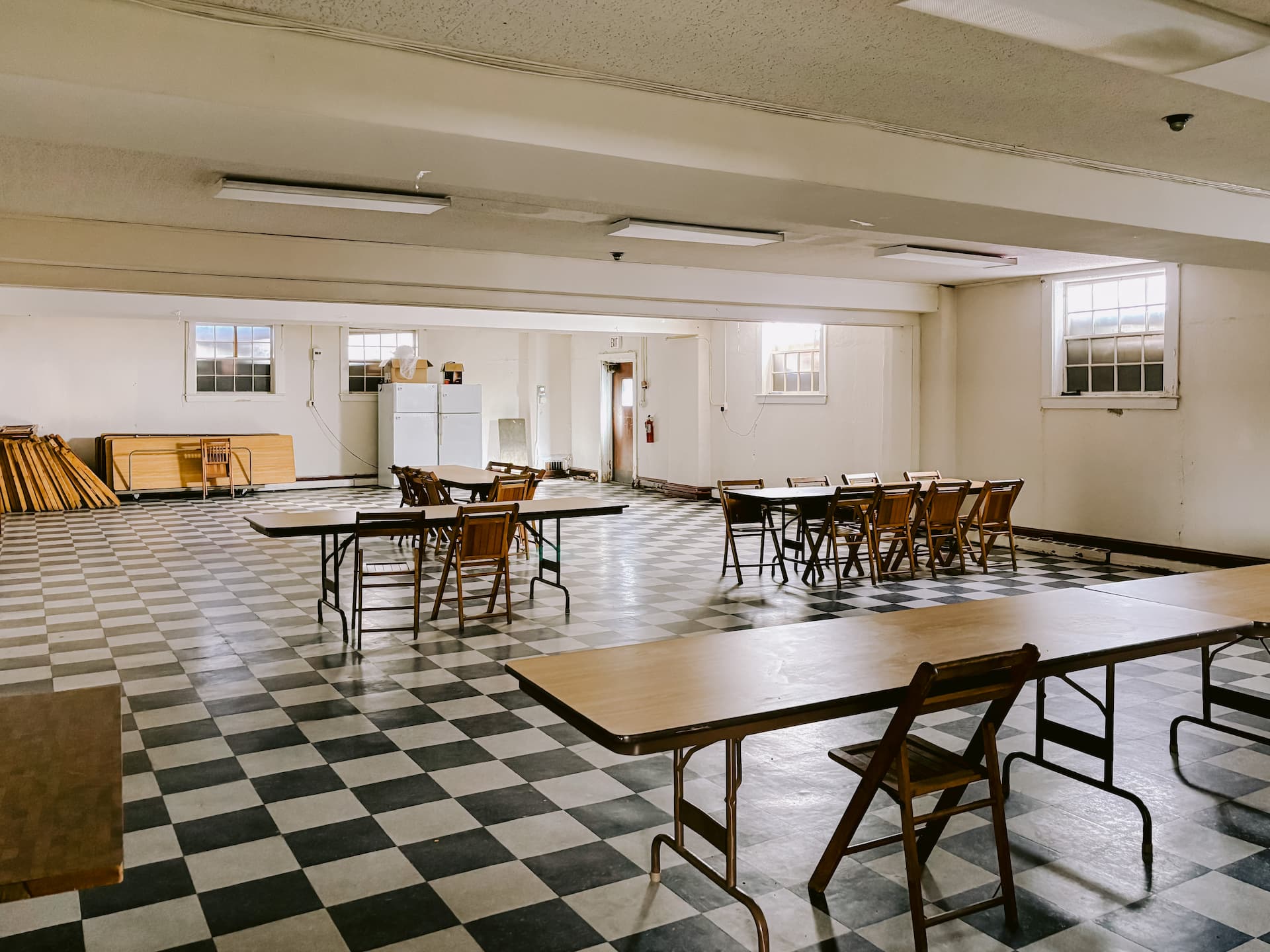
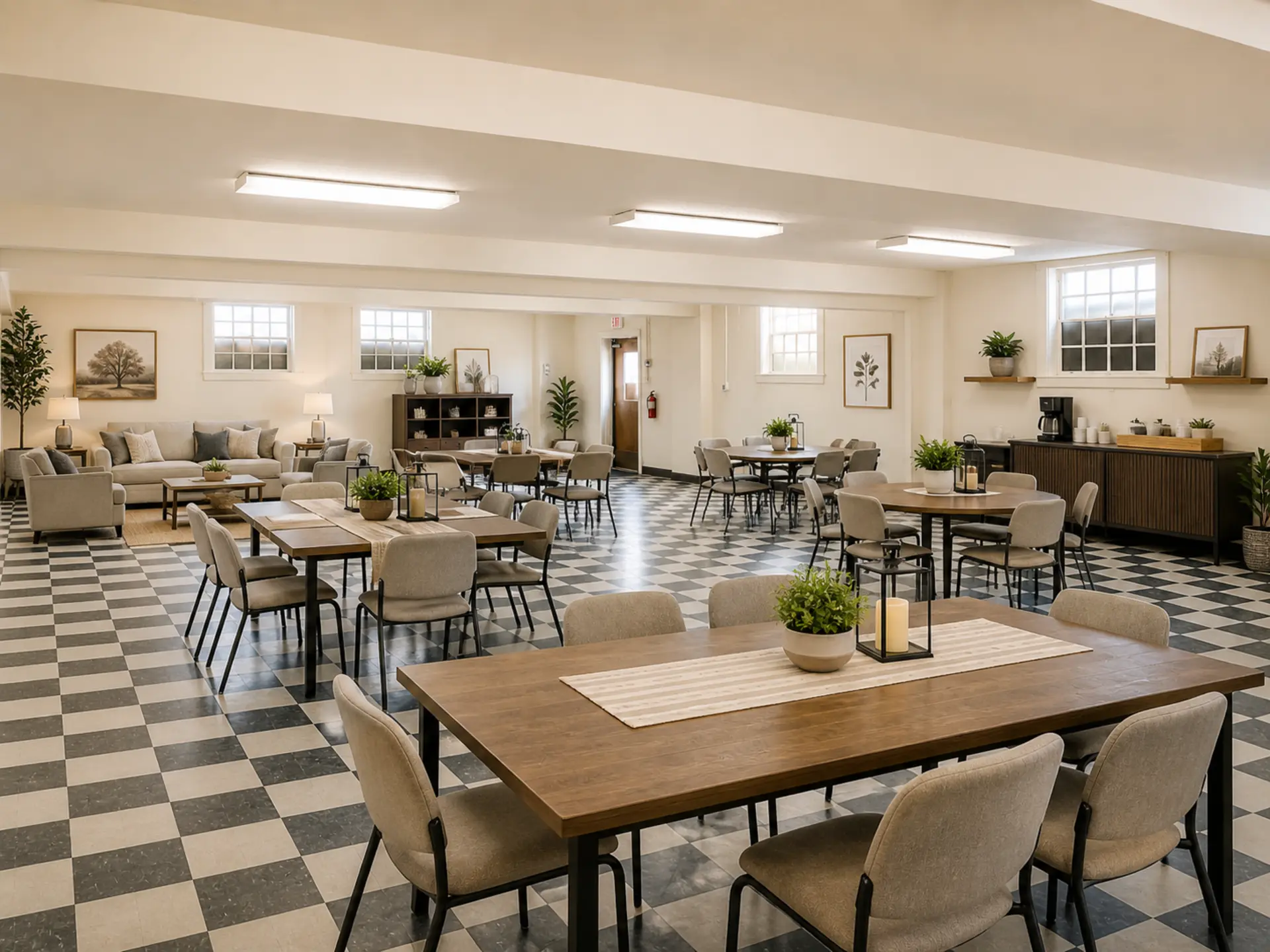
Community hall dining concept
Shows a dining, meeting, or community-use configuration for the lower-level program hall.
CurrentPotential
Community kitchen prep concept
Illustrates a refreshed prep layout for organized food-service operations, storage, serving, and volunteer workflow.
CurrentPotential
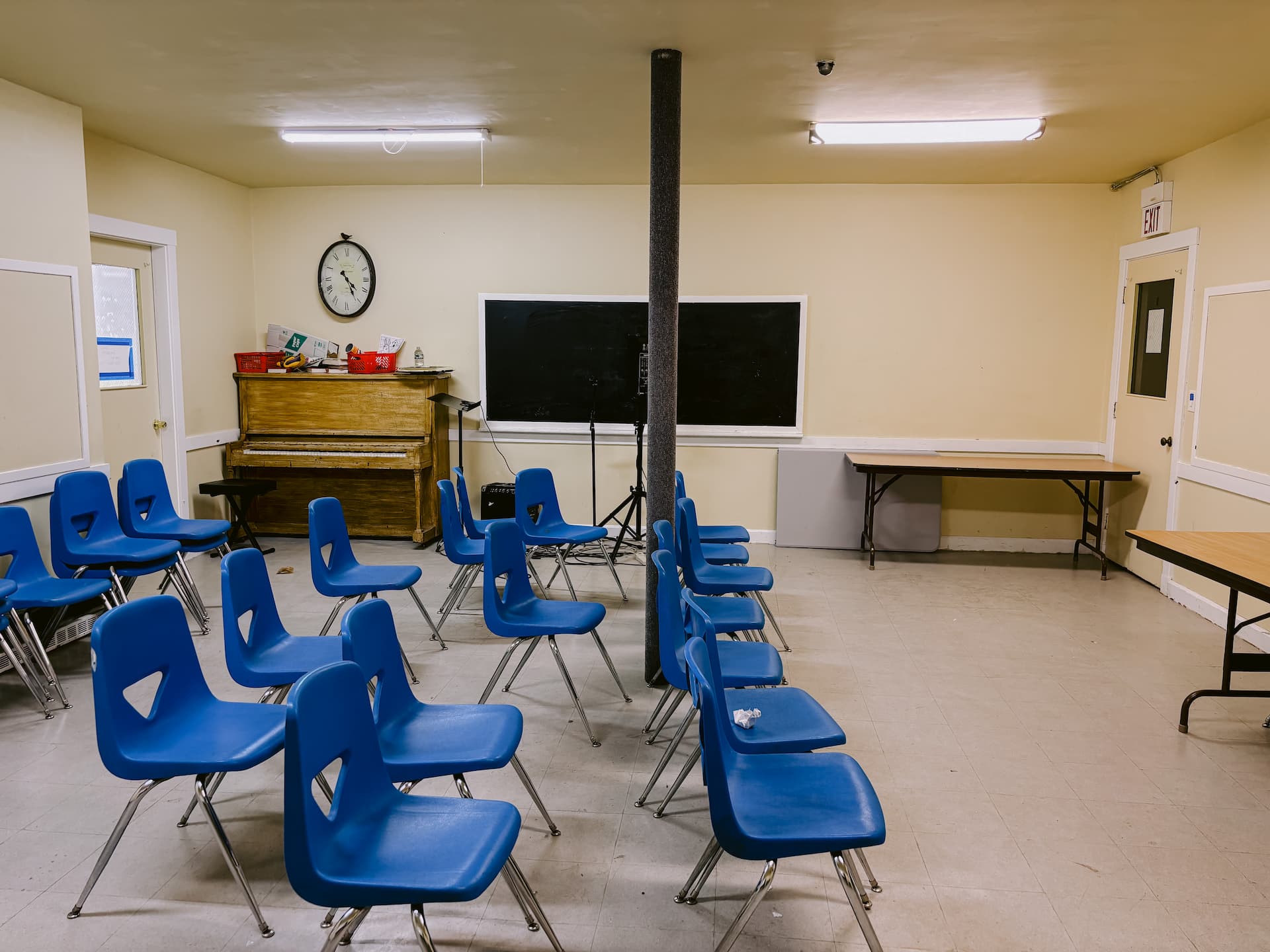
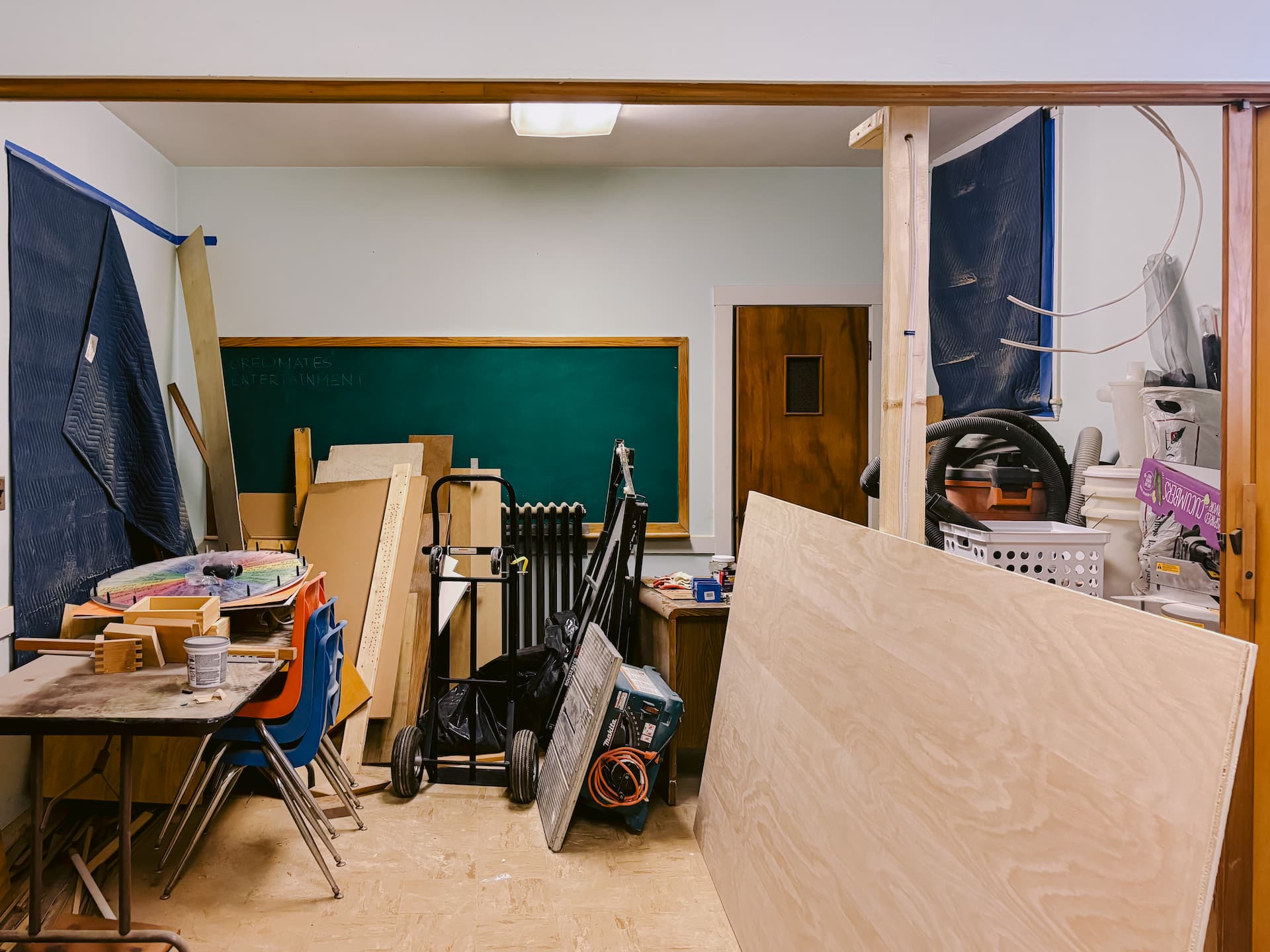
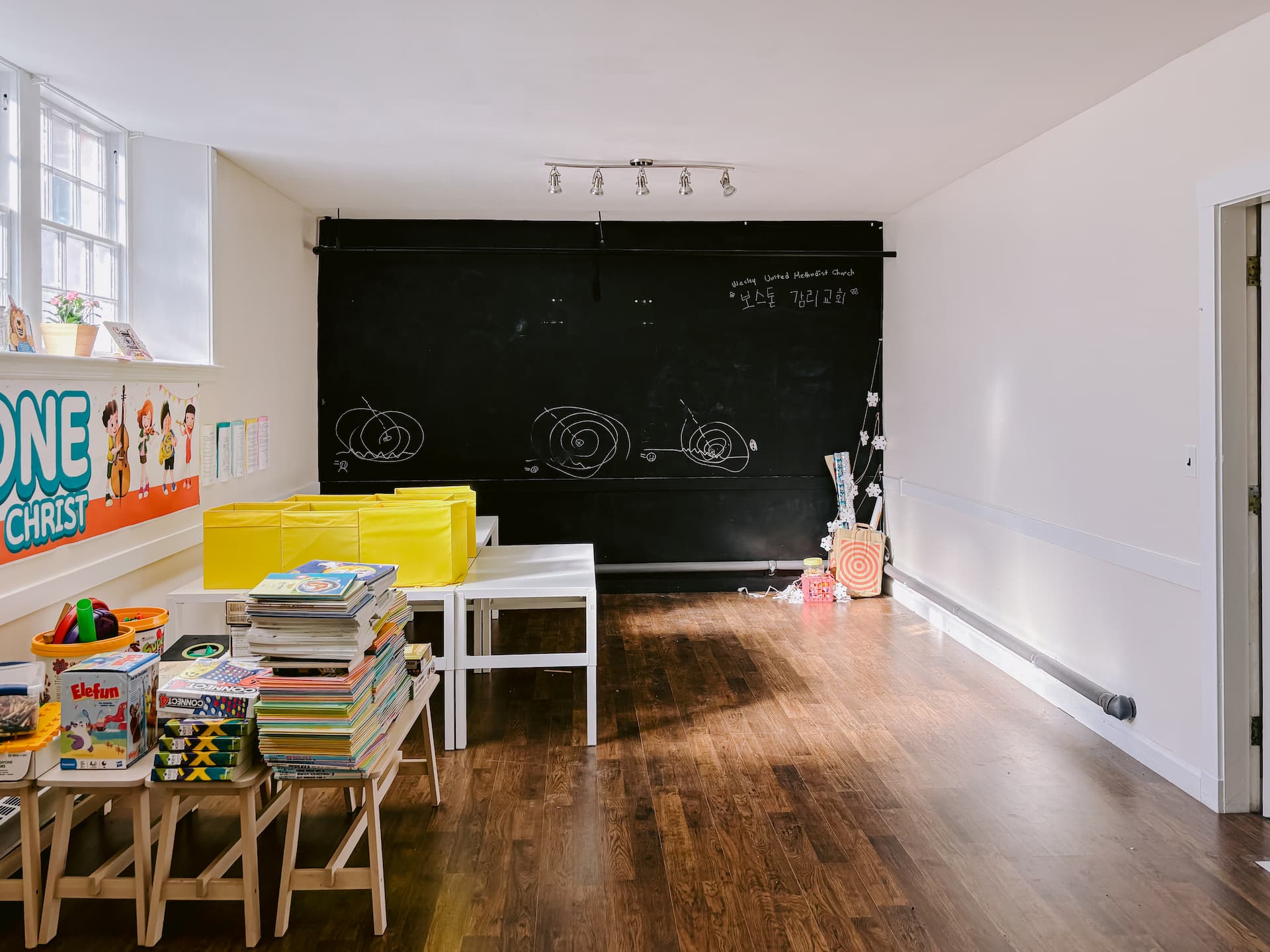
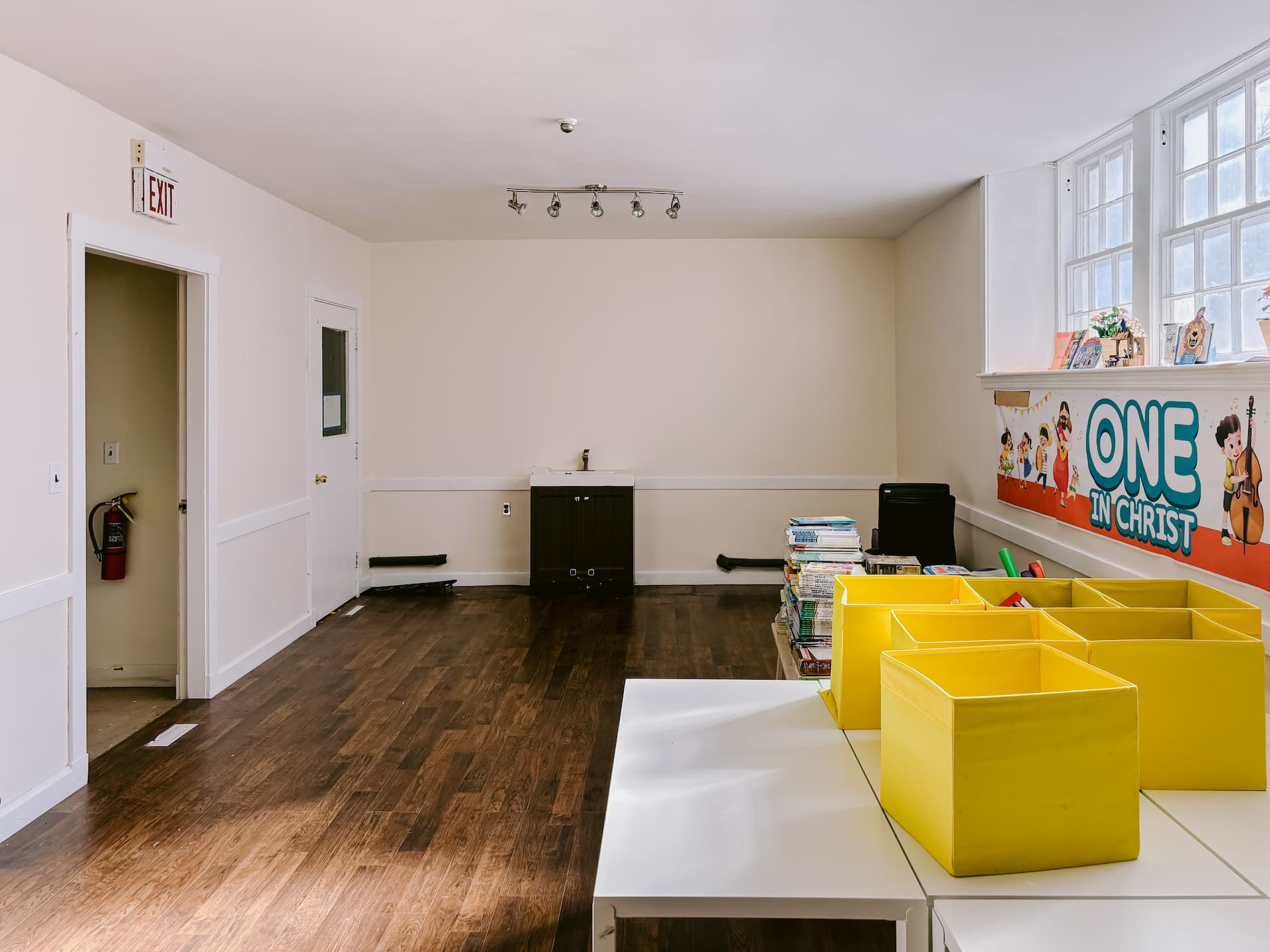
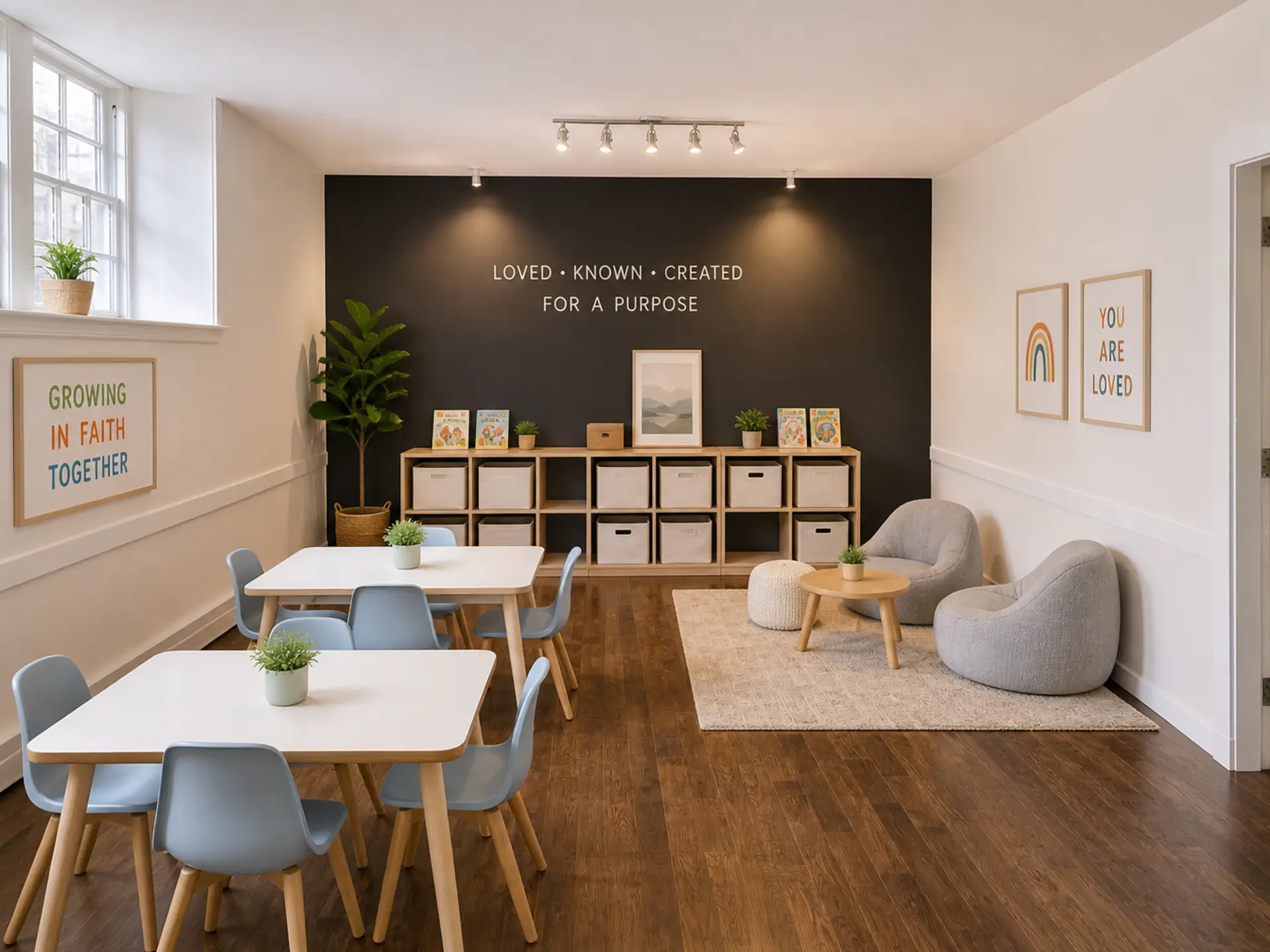
Classroom concept
Shows how one of the existing classroom rooms could be presented for preschool, tutoring, or small-group use.
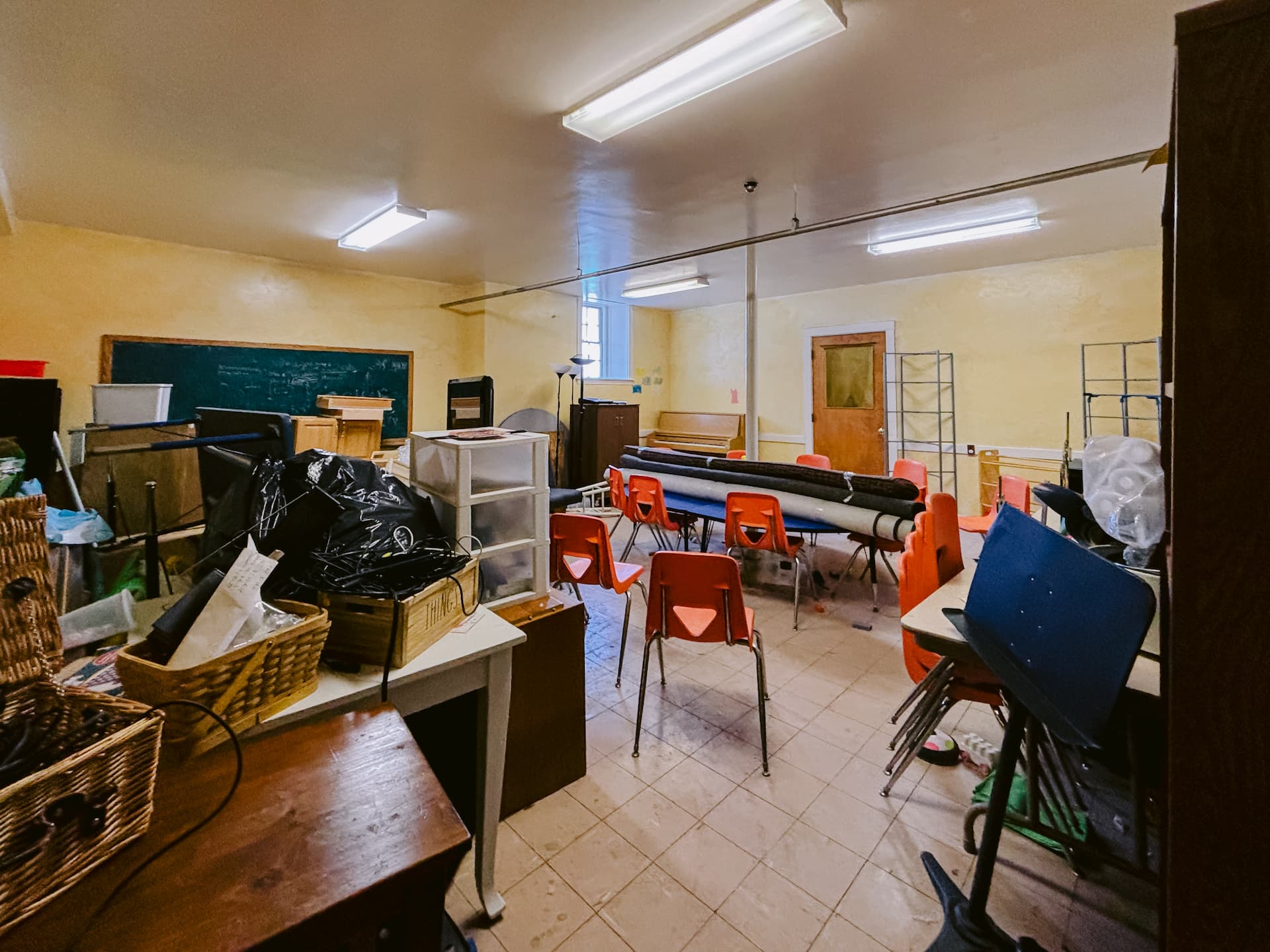
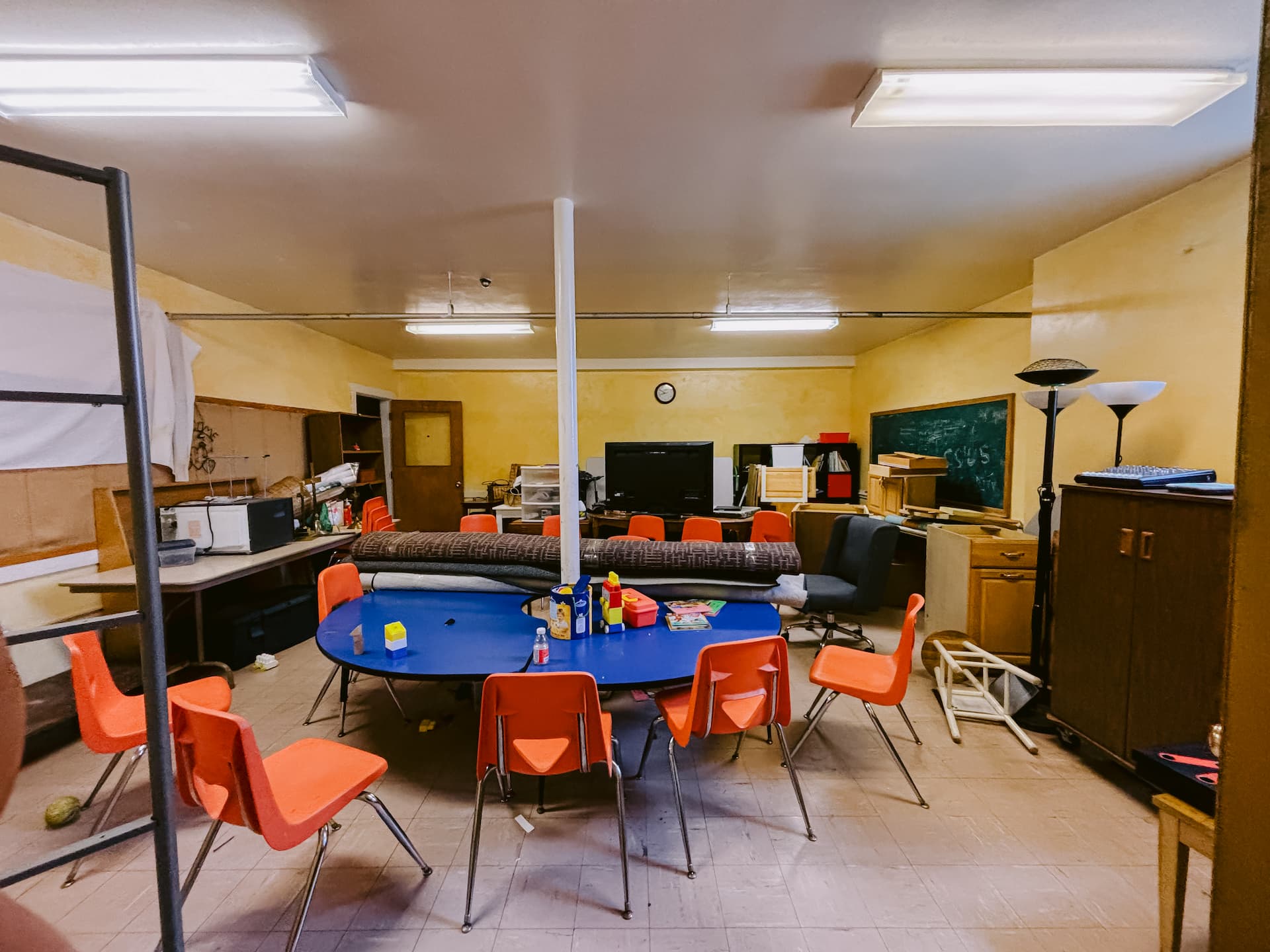
CurrentPotential
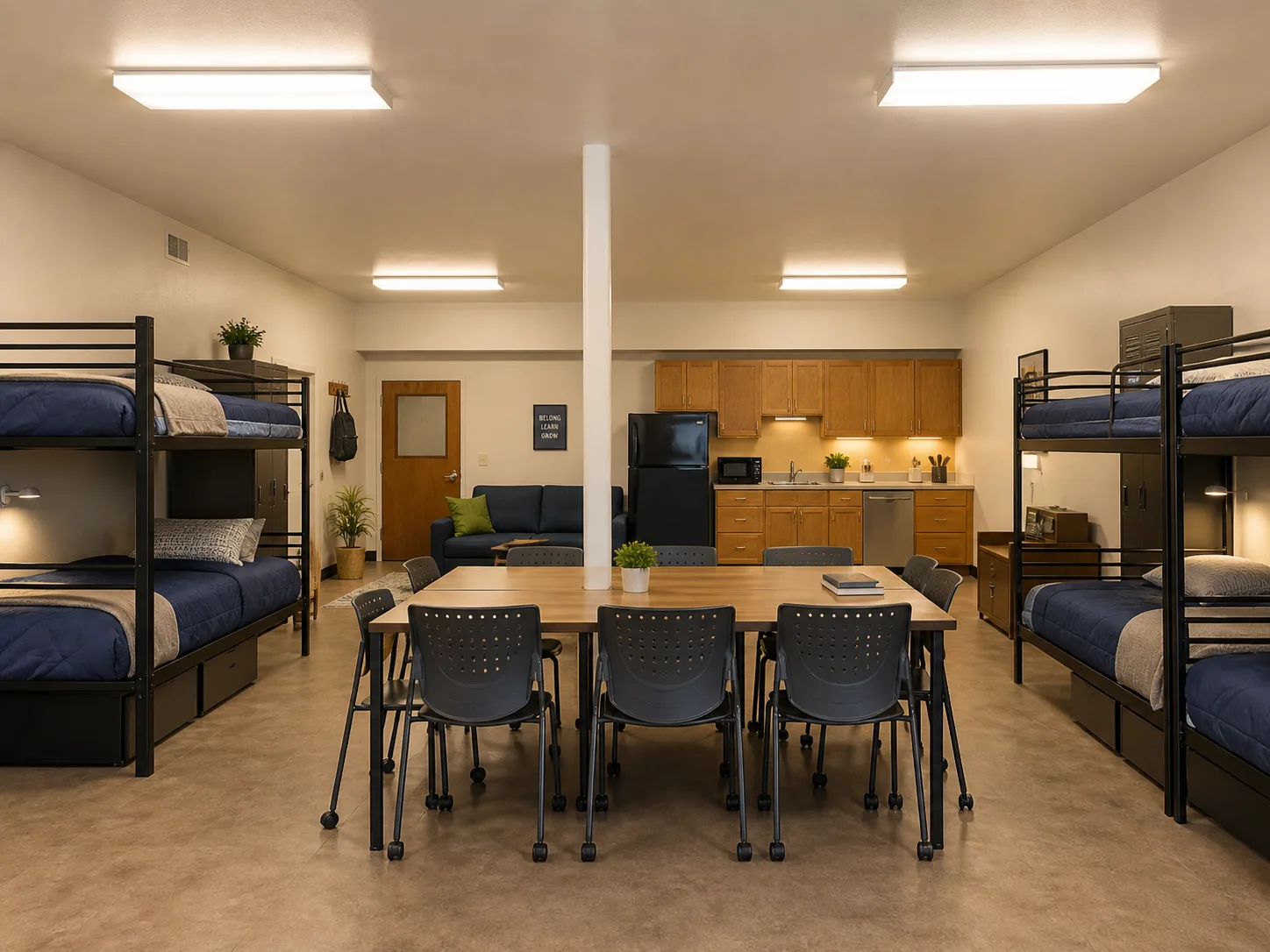
Student housing overflow concept
Shows how the existing classroom-style room could be studied for overnight support, shared table space, and student housing overflow capacity.
CurrentPotential
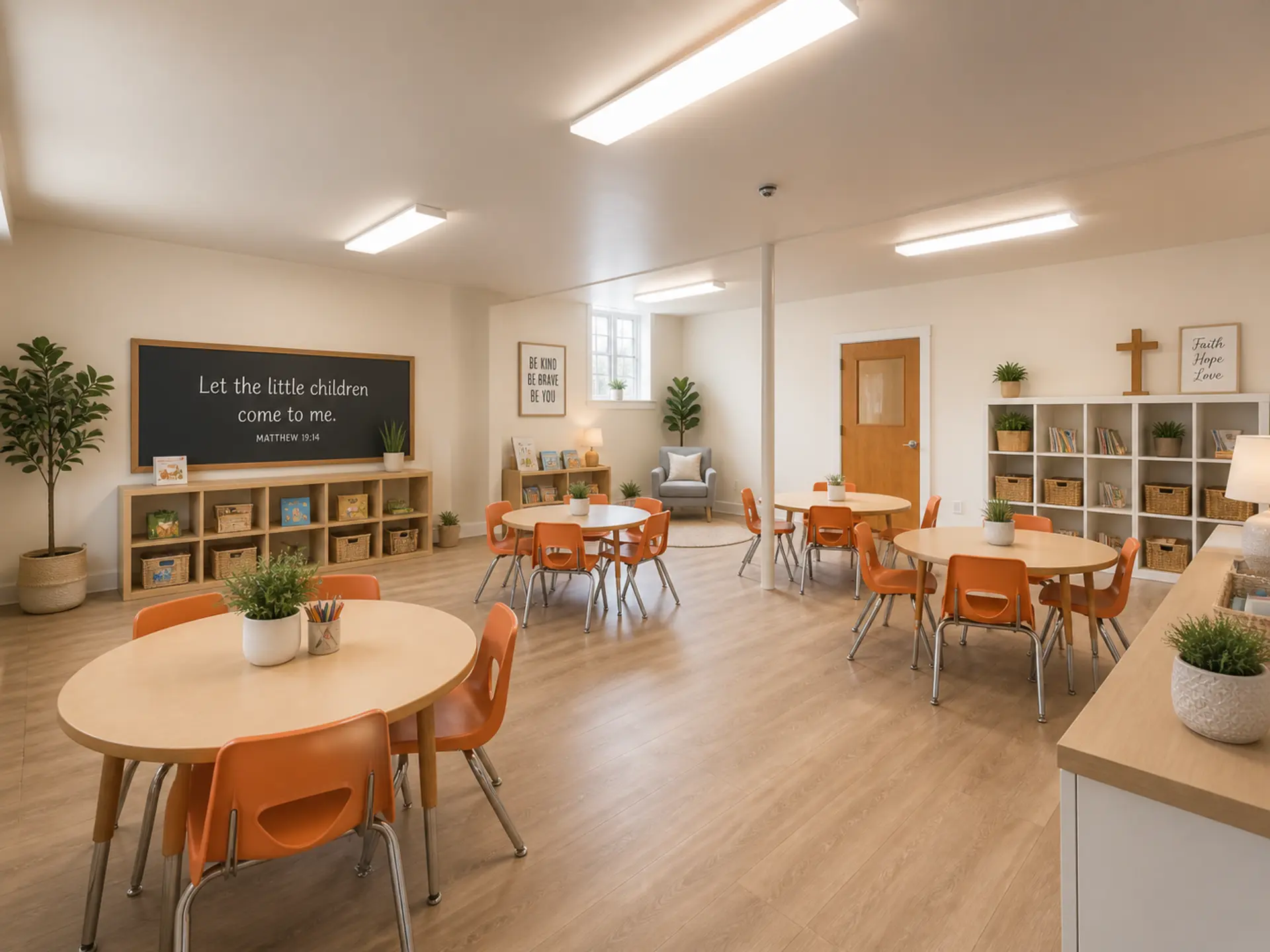
Classroom programming concept
Shows another education-oriented layout for student groups, tutoring, trainings, or campus partner programming.
CurrentPotential
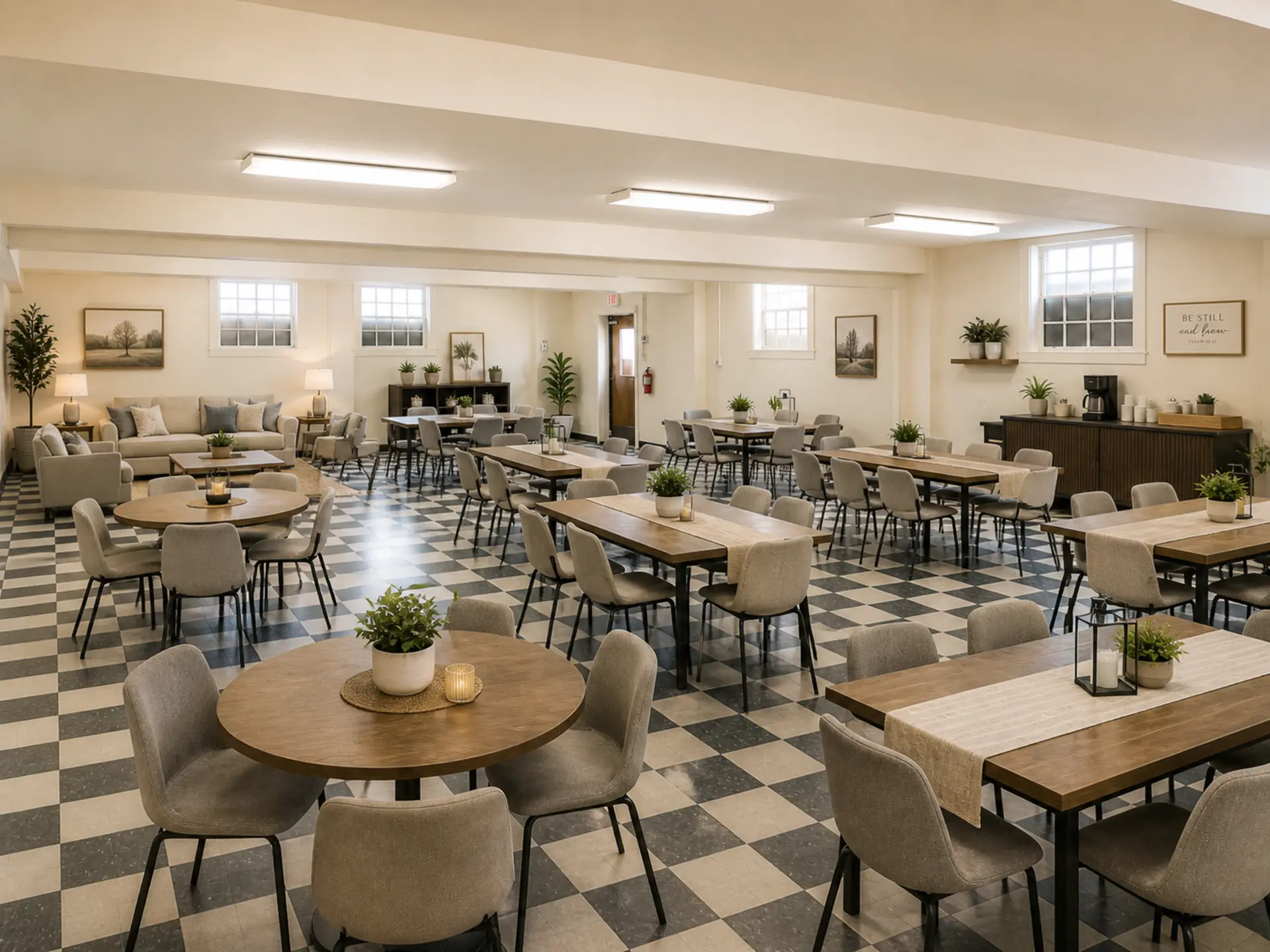
Community hall alternate concept
Shows an alternate program hall furniture plan with dining, lounge, and refreshment zones.
CurrentPotential
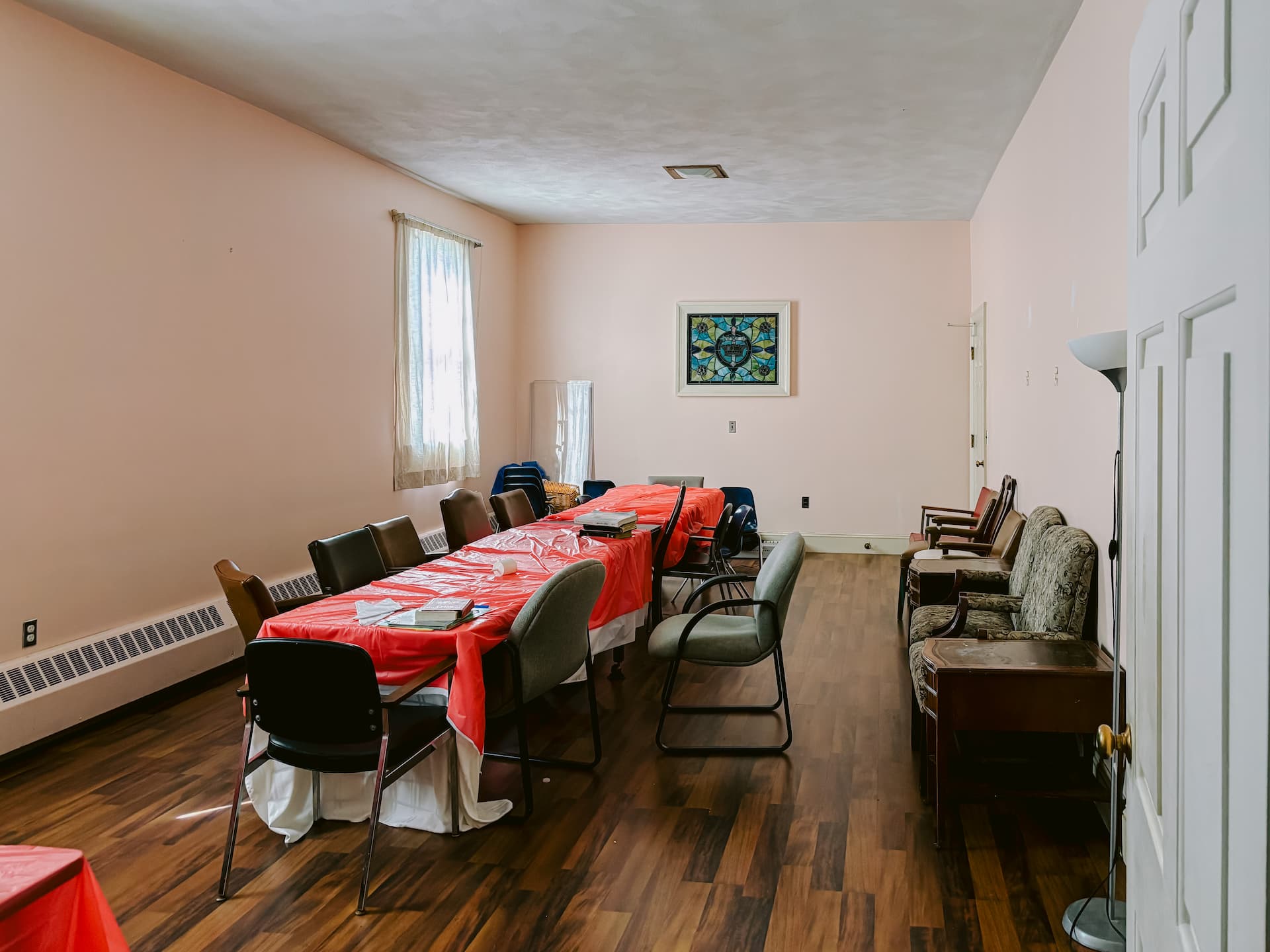
Meeting suite concept
Shows a meeting-oriented configuration for leadership meetings, counseling, student support, or program administration.
CurrentPotential
Small-group support room concept
Shows a cleaner room presentation for student support, family services, education, or small-group programming.
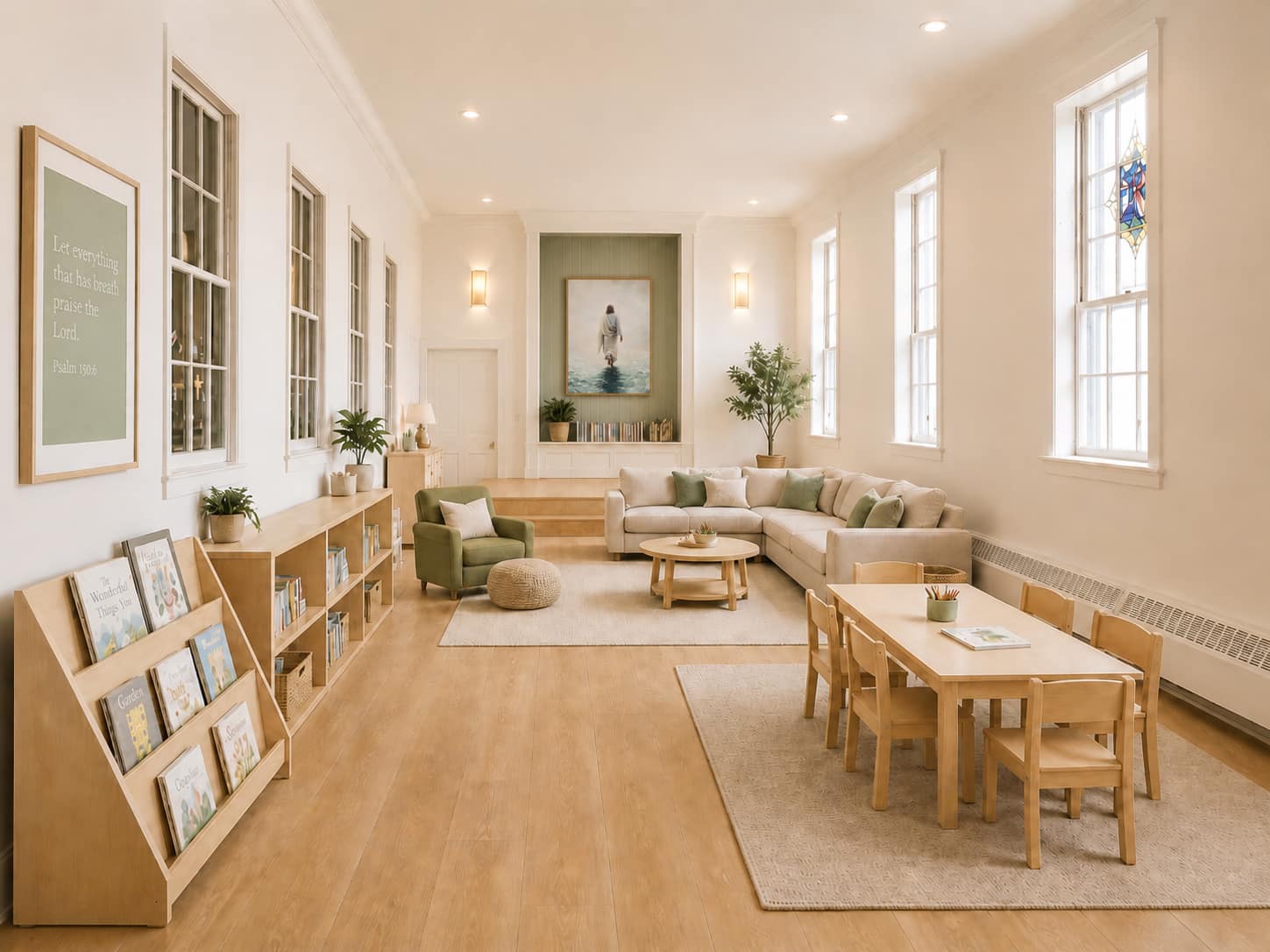
Potential images are virtually staged concept visuals provided only to help reviewers
imagine possible use of the spaces. They may not be accurate in style, layout,
finishes, dimensions, code compliance, cost, feasibility, or permitted condition,
and are not plans, approvals, construction drawings, or representations of
completed or permitted improvements.
Use Cases
Practical Tufts-oriented program fits
These are operating scenarios to evaluate against the existing room program,
kitchen infrastructure, assembly spaces, parking, code requirements, and any
approvals needed for university or university-affiliated use.
Primary Use Cases
Overnight / housing support
Student Housing Overflow / Backup
Overnight-ready building, reportedly already used by Tufts students for
pre-semester community service trips. Existing bedding and sleeping capacity
should be verified during diligence.
Food service / outreach
Community Kitchen / Food Access Hub
Kitchen infrastructure is already in place and could support community
outreach, service-learning, and food access programs subject to health,
licensing, staffing, and operating requirements.
Gathering space
Theatre / Event / Function Space
The main assembly hall and lower-level community hall provide large-format rooms
that could support lectures, ceremonies, performances, receptions, meetings,
student functions, and university gatherings with relatively clear circulation
and support-space adjacencies.
Academic support
Classrooms / Instructional Space
Multiple rooms are already configured for group learning, making academic,
tutoring, training, or seminar use a lower-conversion scenario than a
building without existing classrooms.
Additional Use Cases
Interfaith / Reflection Center
Turnkey spiritual and community space that fits chaplaincy, interfaith,
reflection, belonging, and student-support programming.
Student Wellness or Counseling Annex
Private, off-campus-feeling rooms could support counseling, wellness,
case-management, or small-group services.
Performance / Event / Function Rooms
High-ceiling assembly hall volume and supporting rooms could be studied for
theatre, performance, rehearsal, lecture, event, reception, or flexible
function-space use.
Graduate Student Housing (with conversion)
The square footage and layout may support residential conversion analysis
for graduate or overflow student housing, subject to zoning, code, cost,
and feasibility review.
Admin / Faculty Overflow Offices
Existing office and classroom rooms could serve departments needing
satellite space within walking distance of campus.
Community Partnership Hub
The established neighborhood presence could support town-gown programming,
civic engagement, neighborhood partnerships, and service-learning operations.
Use cases are planning concepts only. Any university, institutional, residential,
food-service, counseling, assembly, or instructional use should be verified against
zoning, building code, accessibility, licensing, life safety, operations, and
institutional approval requirements.
Zoning / Approval Diligence
100 Winthrop St - use approval questions
Verify Early
Current zoning and code requirements still control. A Tufts or institutional
review should confirm permitted use, change-of-use requirements, assembly
occupancy, accessibility, life safety, parking, and any special-permit or
site-plan process before relying on a specific program.
Current useInstitutional assembly
Parcel sizes0.53 ac combined
Review focusInstitutional reuse
Items that may support institutional reuse
Transit and campus context: Medford/Tufts Green Line access and Tufts proximity support staff, student, visitor, and community access.
Existing institutional building: assembly rooms, classrooms, kitchens, offices, and community hall areas already align with university-support programs.
Separate parking parcel: 101 Winthrop can support interim operations, service access, staff parking, or logistics during program review.
Flexible room program: the current layout gives facilities teams multiple ways to study near-term use before larger capital decisions.
Items to verify before internal approval
Current rules remain the base case: no use should be assumed until confirmed with zoning counsel and municipal review.
Change-of-use requirements: dormitory, counseling, food-service, classroom, event, and office uses may each trigger different reviews.
Life safety and accessibility: egress, bathrooms, sprinklers, fire alarm, accessibility, and occupancy load should be scoped early.
Parking and site operations: deliveries, shuttles, service vehicles, events, and neighborhood impacts should be modeled by use case.
Current status: treat zoning, building code, health, accessibility,
parking, and assembly-use requirements as diligence items. The property should be
evaluated against the actual institutional program Tufts wants to test.
Tufts Review Context
Institutional priorities this site can support
For Tufts, the relevant questions are campus fit, operating use,
facilities scope, governance review, and long-term control near campus. Detailed
diligence materials can be provided to Tufts' facilities, real estate, campus
planning, treasury, legal, or outside-advisor teams on request.
Housing pressure
Near-campus overflow and swing capacity
The existing room program, sleeping-capacity history, kitchens, bathrooms, and
walkable Tufts location make the building worth studying for temporary,
pre-semester, graduate, or overflow student-support uses.
Community engagement
Service-learning and town-gown programming
Kitchen, community hall, classroom, and assembly areas align with community outreach,
food access, student service programs, neighborhood partnerships, and civic
engagement activity already associated with the site.
Campus adjacency
Flexible satellite space near the core campus
The combined building and parking position gives a facilities or real estate
team a nearby option for classrooms, counseling, interfaith programming, offices,
theatre/event/function use, or interim space without depending on main-campus construction.
Review note: this brief is intended to support a facilities and
real estate conversation, not a small-organization financing process. Additional records,
floor plans, concept files, property cards, and tour coordination can be packaged
for institutional review on request.
Next Steps
What Tufts should confirm next
If the site fits a real university need, the next step is focused diligence on
program fit, facility scope, approvals, and internal review timing.
1
Confirm program fit
Prioritize the use cases Tufts would actually study: housing overflow, service-learning, wellness, interfaith, theatre/event/function space, classrooms, or offices.
Identify the internal stakeholders, governance steps, municipal approvals, tour needs, and records required for institutional review.
Pricing & Contact
Offered at $2,950,000
For Tufts or institutional reviewers evaluating ownership and campus-use
potential, contact the listing agent to discuss fit, tour availability,
diligence materials, and offer timing.